
Although I had complained about the Musikmesse 2016 in the last post, the visit of Hans Eckert, his sign plucked instrument maker from Mühltal near Darmstadt was worthwhile again this year.
After all, Hans is no ordinary guitar maker. “I really enjoy experimenting with different types of instruments to understand how they work,” explains Hans, a young instrument maker who is exhibiting his own instruments for the first time this year at the International Music Fair in Frankfurt am Main.
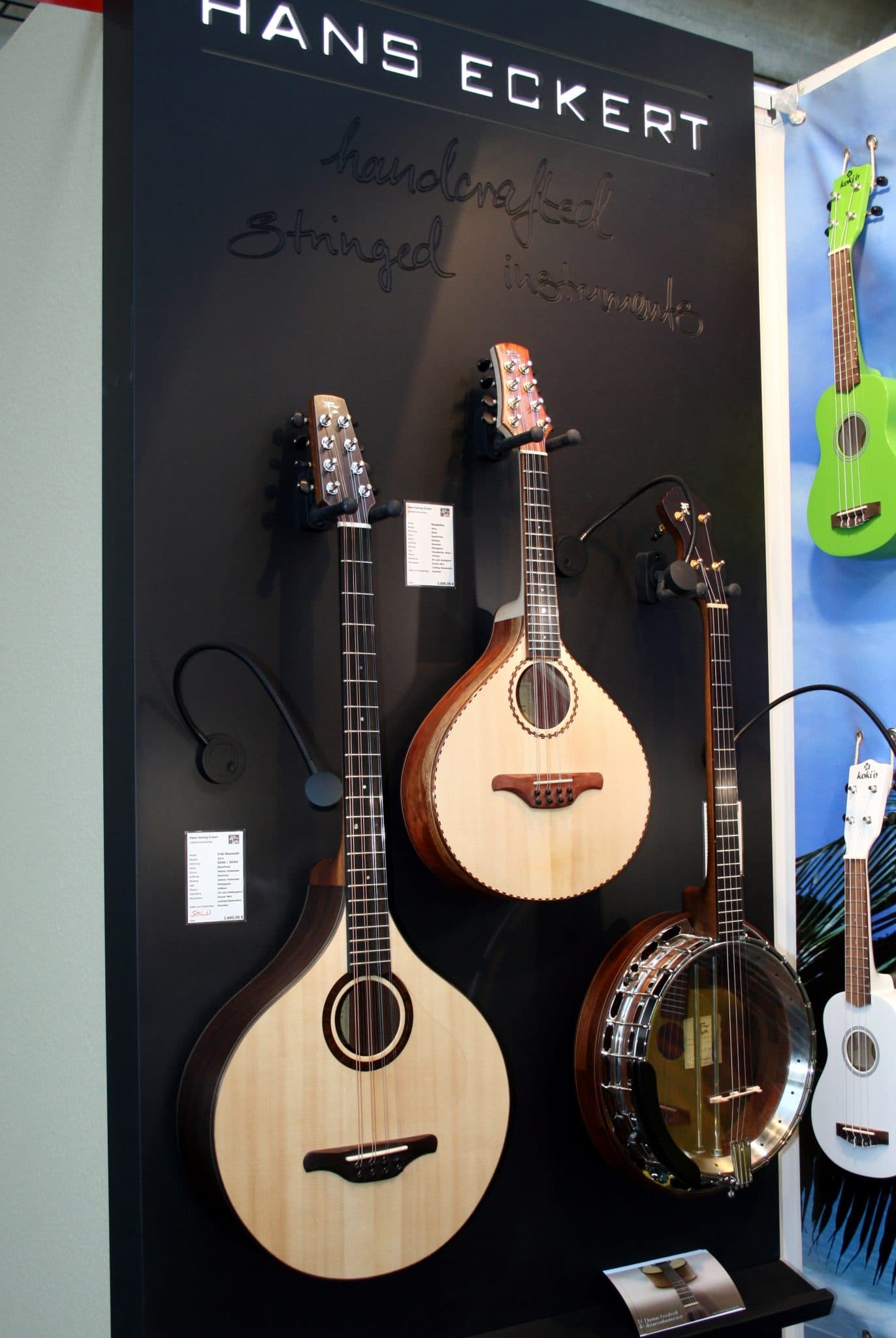
And in fact, there isn’t a single classic concert guitar among them. Instead, there are high-quality stringed instruments such as an Irish bouzouki, a mandolin, and a tenor banjo.
So you’re an instrument maker who doesn’t make classical guitars, but rather custom builds and experiments?
“Yes, of course I’m more than happy to accommodate special requests. During my apprenticeship as a guitar maker at the violin-making school in Mittenwald, I built four classical guitars. But it wasn’t until after that that I began building instruments that truly interested me.”
Which instruments do you like to build the most?
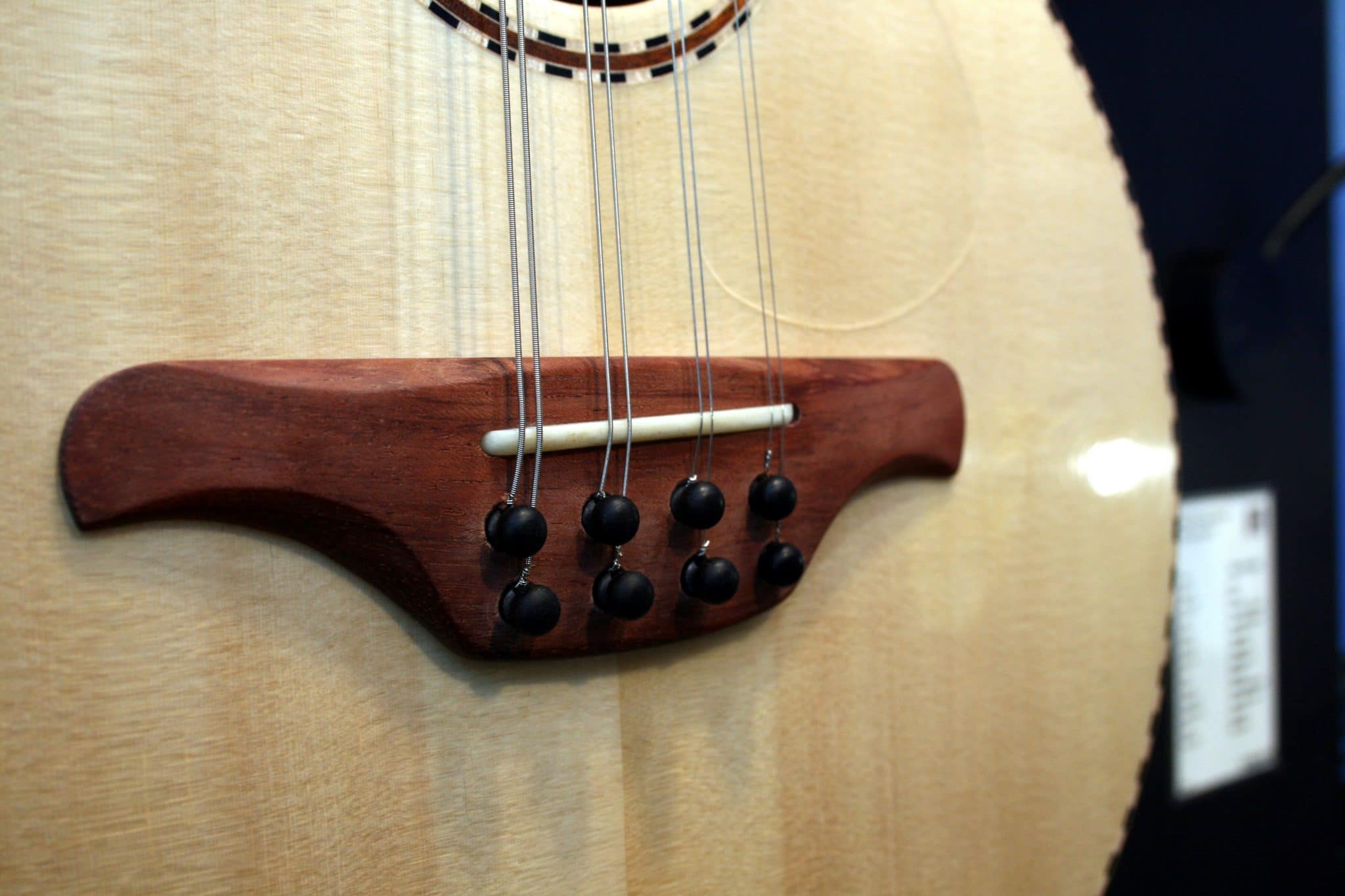
“I finished my prototype mandolin in November. Before that, I had built a bluegrass mandolin in the Gibson F5 style. But for Irish music, I wanted more volume and a richer tone with fuller bass. For my prototype, I slightly lengthened the scale and fitted it with a wider fretboard, building it exactly the way I wanted it. I wanted more space on the fretboard. And for a better tone, I decided to ditch the floating bridge in favor of a fixed bridge mounted on the top with bridge pins for securing the strings. That, along with a larger body, provides more fullness—simply more oomph!”
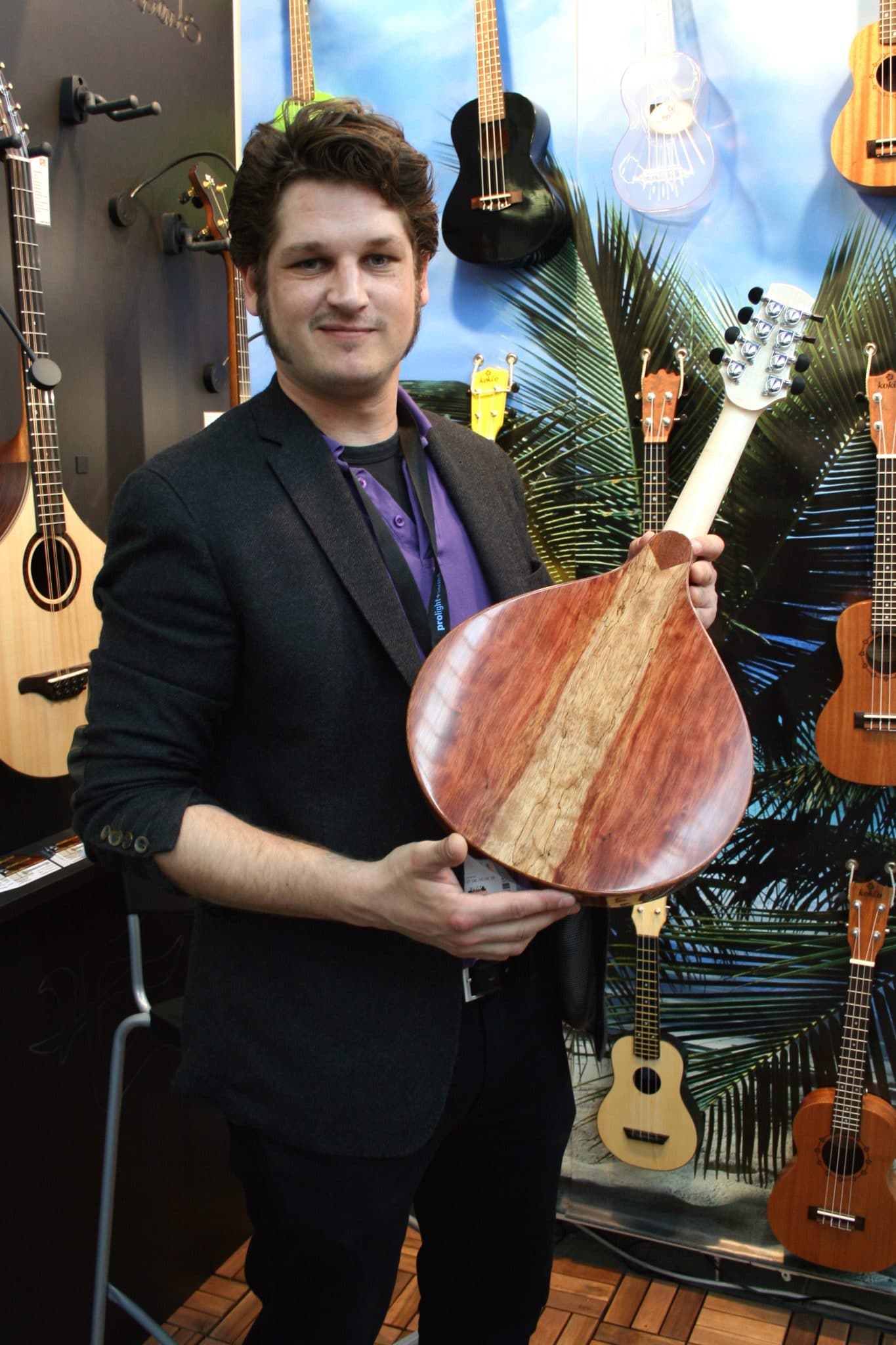
Based on this prototype, I built a series of three additional mandolins from various woods: one from African bubinga, one from East Indian rosewood, and one made exclusively from non-tropical woods, such as yew, walnut, and maple. A selection of European woods that proves tropical woods aren’t the be-all and end-all. Blind tests show that tropical woods don’t necessarily sound better. However, for most people, they’re more visually appealing.”
- How long have you been building guitars?
“I completed my carpentry apprenticeship in 2005. After that, I went to Mittenwald to attend the violin-making school for another three years. I graduated in 2009. Then I began setting up my own workshop. At the same time, I worked for five years at an antique furniture restoration shop, where I also learned a great deal. I worked for him two weeks a month and spent two weeks on my own business, gradually building up my self-employment. In 2015, I finally took the plunge and dared to work full-time as an instrument maker. Since 2012, I’ve also been working regularly as a freelancer for the company RISA, installing pickups and repairing ukuleles as needed.”
As a guitar maker who much prefers to develop stringed instruments and fulfill special customer requests than to build classical guitars, you present us with a real eye-catcher today!
-
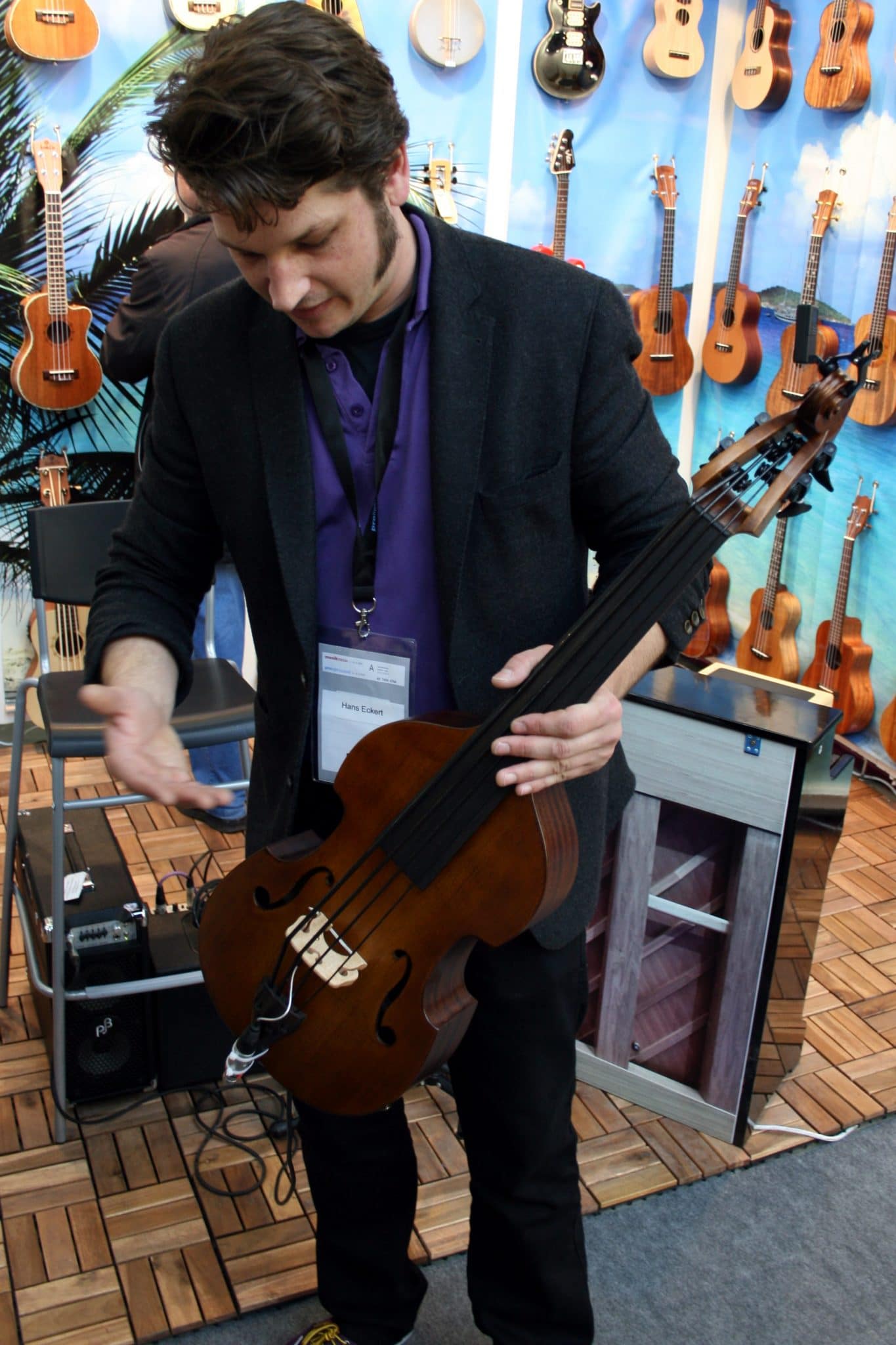
A crowd-pleaser at the Musikmesse: a double bass ukulele
“The ‘Upright Uke’—as I’ll call it—is a mini double bass with pickup strings that was just finished a few days ago—right on time for Musikmesse.”
What inspired you to create this instrument? How did you come up with the idea?
“The idea came from Rigk Sauer of RISA Musical Instruments. He wanted to give the ukulele bass—which has been in the RISA catalog for quite some time—a slightly more sophisticated look as an acoustic bass, specifically in the typical viola da gamba shape of a double bass, which can be played upright.”
Can you actually play this ukulele-sized double bass standing up?
“The spur—that is, the spike—would have to be pretty long. Of course, you could also strap it on. But my preferred way of playing is upright, sitting on it or between my legs, so I can play it like a double bass. Some people at the fair simply held the instrument on their arm and played it that way.”
Great sound! The double-bass ukulele is currently amplified. Can you also play it purely acoustically?
“Yeah, it’s fine. But the small body just doesn’t produce much volume. Acoustically speaking, it can’t be compared to a large double bass. You definitely have to play with amplification to keep up with louder instruments.”
That’s great. And today you’ll be at the Musikmesse with RISA Instruments?
“That’s right—I’m helping out at the booth. This is my third year with RISA at the trade show in Frankfurt. And this time, I get to display my own instruments, too. I think that’s fantastic.”
-
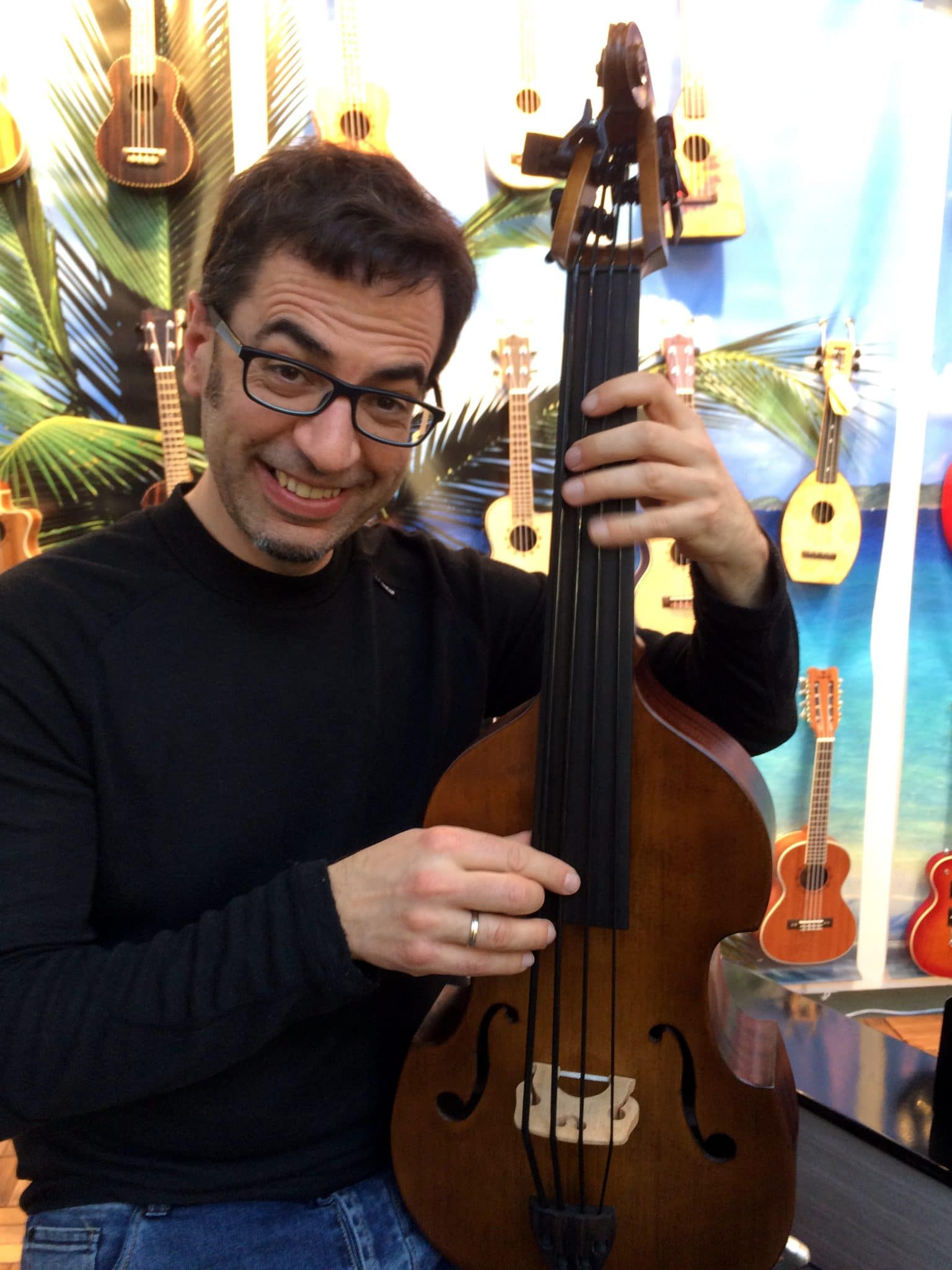
An enthusiastic visitor plays the double-bass ukulele
How has the response been so far for your instrument-making?
“There have already been a few interested people here, but no concrete orders yet. I hope that changes by the end of the show. And we need to figure out what to do with the mini ukulele double bass in the future. The trade show is a great place to test out different components, such as pickups. The suppliers are right here on site.”
So you’re checking to see if your prototype can be mass-produced in the future?
“Exactly. We’re still experimenting with different components, such as strings.”
All right, then I’ll keep my fingers crossed for you and wish you continued success at the Musikmesse.
Formore information about Hans Eckert’s guitar-making, visit www.heckertguitars.de

