
You’ve just tuned the drone, and already the upper part has slipped down a bit. Before you start searching for the right pitch again, check that the tuning slide is seated properly. Often, you can tell just by feeling it with two fingers whether the winding is right.
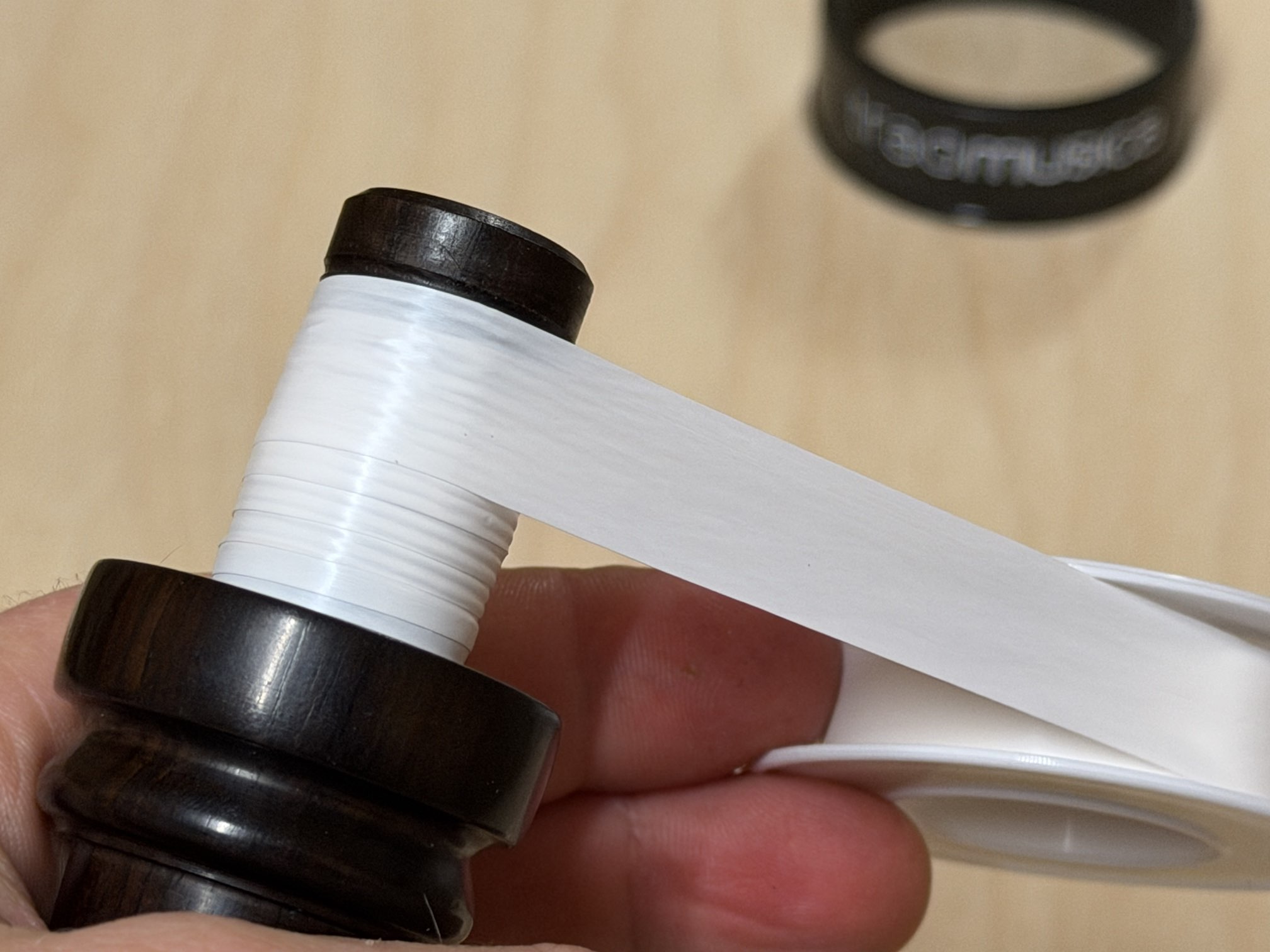
Check the yarn winding first
Pull off the top part of the drone and run your thumb over the string. If it slides on the tuning peg or if the tuning string has side-to-side play, first realign the string winding. If the yarn is seated evenly and tightly, a thin layer of PTFE can help you fine-tune the tuning pin. The reed maker MG Reeds also uses the tape on its tuning pins in this way.
Loading the tape
Hold the beginning of the tape in place with your thumb on the dry section. Wrap it in the direction you’ll be turning the top piece when putting it on. This way, the other piece will smooth out the tape as you assemble it. Start with a thin layer, tear off the tape by hand, and press down on the end.
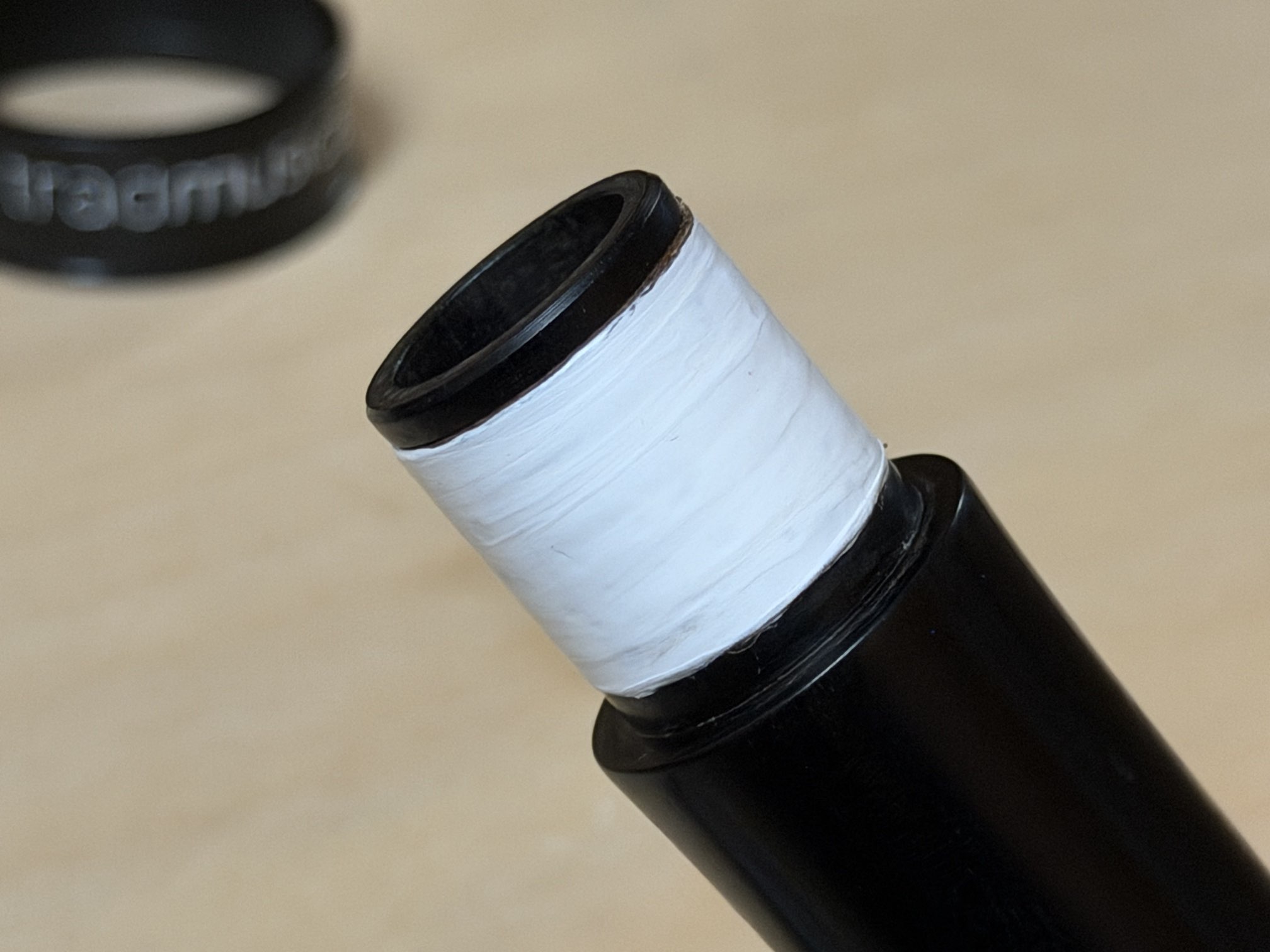
The two-finger-and-thumb test
Place the top piece on with a slight twist. You should be able to move it with your thumb and two fingers, and it should stay in the chosen position when you let go. If you have to grip it with your whole hand, remove a little string. If the top piece still slips, add some string if the base winding is too loose. Play the drone for a few measures and retune it. Now you’ll see if you can make even the final small adjustment with one hand.


