
Nordic mythology full of deities and tragic fates!
It’s no surprise that when we listened to Strömkarlen’s new album, we immediately fell into a feeling of connection with the music, with the lyrics (even though we can’t understand them), and with the dedication of the trio and their guest performers.
Already at the first sounds of the double album the magical creatures of the old Nordic saga world danced through the living room and we read spellbound in the high-quality cloth-bound booklet the German translations and additions to the gods and heroic sagas set to music.
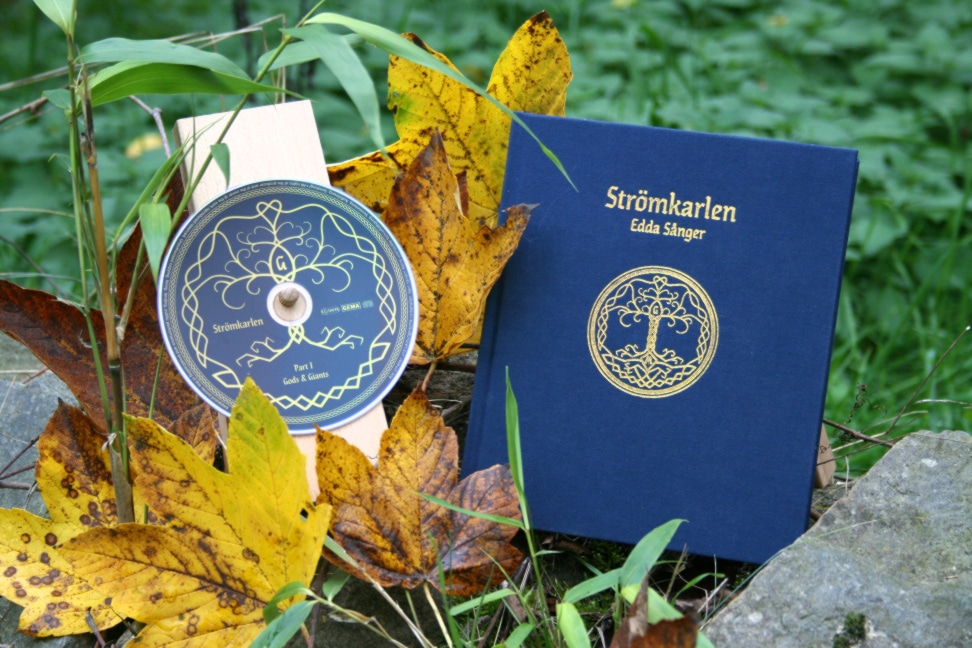 The German-Swedish folk trio Strömkarlen has been around for ten years now. While they have always set Irish and Scandinavian folklore to music and have increasingly created their own songs in recent years, they have ventured into new territory with their new album Edda Sånger deep into Norse mythology, which revolves around Niflheim, Odin, Thor, Freya, giants, and the fate of the people of Midgard. This fit very well, as the trio rightly sees itself as part of the tradition of the skaldic heritage. Since there are few, if any, surviving musical settings for many of the traditional texts, the three musicians made it their mission to compose suitable music—music that could have sounded that way in the past yet still aligns with modern folk. The trio also had to improvise, at least in part, the pronunciation of the Old Icelandic words.
By the way, “Strömkarlen ” means “water spirit,” as we learned on the artist’s page. This water spirit lives along Sweden’s rivers and lures travelers into the waters with the enchanting sound of his fiddle. It reminded us very much of a male version of the Loreley—even though he plays the fiddle and doesn’t sing.
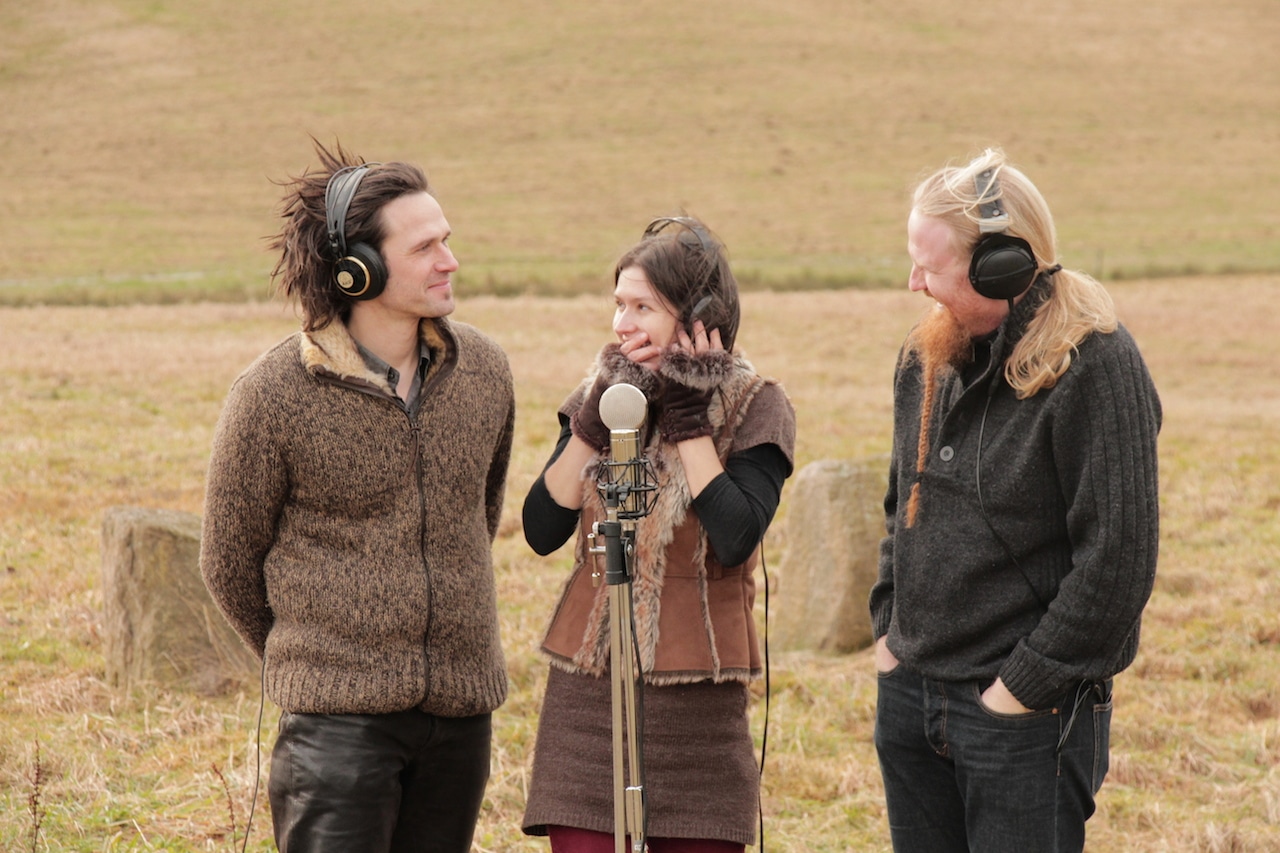
The trio consists of Swedish founder Stefan Johansson (vocals, guitar), German musician Christina Lutter (vocals, violin, tin whistle), and German musician Guido Richarts (vocals, double bass, bodhrán, piano). For the album *Edda Sånger*, the trio enlisted top-notch guest musicians such as Daniel Wirtz (mandolin), Elisa Herbig (cello), Jan Heinkes (overtone singing, undertone singing), Krishn Kypke (sitar), and Robert Leuschner (bagpipes), to name just a few.
The album
[youtube https:=””]
The first part of the double album focuses on the gods and giants of the Ancient World. In the second part, the band explores the themes of war and wisdom. You can find an overview of the individual tracks, along with audio samples, on the Strömkarlen website.
In what follows, we’ll try to put our impressions of a few selected pieces into words. On the first CD, “Gods & Giants,” the first track , “Völuspá I – Ár var ald,” translates roughly as “The Creation of the World .” Amid thunder and rumbling, we plunge into the darkness. Clattering, creaking, nothingness, emptiness… Then a zither, the first promising melodies—it’s about to become a song, does become a song, still reverberating against the bass-heavy backdrop. And then the bright, clear voice of a woman. Still thunder and rumbling. A man’s Nordic chant alternates, then they sing together. Magnificent, promising, heralding—the beginning. A dance begins.
Two pieces later, “Thrymskvida,” The Return of the Hammer, completely captivated us. A men’s choir, then chordal accompaniment. A man narrates as a soloist. A lively rhythm. Like a folk tale. Mandolin. A dialogue between singers. It was a delight to listen to.
On the second CD “Wisdom & War” we encounter Mongolian overtone singing in the piece “Groagaldr”. Magic songs of the Groa means the song and begins with soothing, protective singing, like that of a mother, preparing for the journey.
“Årle i old, då ørnane gol”(Long Ago, When the Eagles Soared) , *The Birth of Helgi, the Slayer of Hunding*, features the violin and the Drehleiher, a man’s solemn, proclamatory singing, and even Indian-inspired sounds. Then a dance song begins with the hurdy-gurdy. The singing is supported by polyphonic harmonies. There are even minstrel-like sounds, with a constant alternation between solo vocals and the rest of the melody. Then comes the Scottish border pipe, and the song concludes with a cappella.
Just as deeply as we were drawn into Strömkarlen’s double album *Edda Sånger*, we are gently guided back to the present with “Völuspå III: Ragna rök, ” *The End of the World*. Another archaic cry, a rumble, a clatter, a deep thunderhorn. Rain. Vastness. Singing. A powerful choir calls out. Melodic dulcimer in the distant background. It clears, slowly. An electric guitar slowly comes to the forefront. We’ve arrived back in the present.
Conclusion
The album is profound, varied, and multi-layered. In some tracks, elements of pagan folk (see earlier works by Faun or Omnia) are woven in, while a few passages remind us of the songs by the band Ougenweide. We also had associations with the dwarf song from Jackson’s film trilogy *The Hobbit*, based on Tolkien’s novel; or we were reminded of the song “Svart Djup” by Finntroll.
*Edda Sånger* is an album that, even days after the first listen, continues to conjure up melodies and worlds in your mind; in short (except for the electric guitar at the end), Strömkarlen have created a masterpiece!
Next concerts
Buy the album: http://www.stroemkarlen.de/kaufladen
Website: http://www.stroemkarlen.de/
Edda Sånger – Nordic, folk, epic!
Nordic mythology, full of deities and tragic fates!
It’s no wonder that we have had a feeling of being united with the music, the lyrics and the abandonment of the trio and their guest musicians by listening the new album of Strömkarlen.
Already during the first sounds of the double album magic creatures of the ancient nordic legends dancing trough our parlour and we were reading the German translations of the songs and the supplements in the high-quality booklet.
The German-Swedish folk music trio has been around for 10 years now. From the very beginning, they have set Irish and Scandinavian folk songs to music and created their own new folk tunes. With Edda Songs The band delved deep into Nordic legends, exploring Nilfheim, Odin, Thor, Freya, giants, and the fate of the people of Midgard. This fits very well because the trio sees itself as part of the Skaldic tradition. For many of the historical lyrics, the original musical forms have been lost. For this reason, the three musicians compose new melodies. The pronunciation of Old Icelandic must also be improvised.
By the way, “Strömkarlen” means “water spirit.” It lives in the rivers of Sweden and lures hikers into the river’s currents with its enchanting fiddle music. We think it sounds like a male version of the Loreley—even though the water spirit plays the fiddle instead of singing enchanting songs!
The trio consists of Swedish founder Stefan Johansson (vocals, guitar), German musicians Christina Lutter (vocals, violin, tin whistle), and Guido Richarts (vocals, double bass, bodhrán, piano). For Edda Sånger, they invited top-notch guest musicians such as Daniel Wirtz (mandolin), Elisa Herbig (cello), Jan Heinkes (overtone singing, undertone singing), Krishn Kypke (sitar), and Robert Leuschner (bagpipes).
The Album
The first CD of the double album features songs about the “Gods and Giants” of the ancient world. On the second CD, the band explores themes of “Wisdom and War.” You can find an overview of all the tracks on the Strömkarlen website (including audio samples).
We will try to figure out our impressions of several selected tracks:
On the first CD, the first track is called “Völuspá I – Ár var ald”. That means “The Creation of the World”. With thunder and rumble, we descend into darkness. Rattling, creaking, nothing, emptiness. Then a zither, then a few promising melodies; it will become a song—it became a song. Still roaring from the bass in the background. And then the bright, clear singing of a woman. Still thunder and rumble. The Nordic singing of a man. Then both, woman and man, are singing together. Magnificent, promising. Announcing the beginning. A dance begins.
Two tracks later , “Thrymskvida” ( “The Theft of Thor’s Hammer”) cast a spell over us. A men’s choir, accompanied by chords. A man narrates as a solo singer. It sounds like a folktale. Mandolin. A dialogue between singers. Lovely to listen to.
On the second CD, we encounter Mongolian overtone singing in the track “Groagaldr,” The Chant of the Groa. It begins calmly, with a kind of protective singing, like a mother preparing for a journey.
“Årle i old, då ørnane gol,” *The Birth of Helgi Hundingsbane*, performed with violin and hurdy-gurdy, featuring expressive male vocals and Native American sounds as well. Afterward, the hurdy-gurdy plays a dance tune. The song is accompanied by polyphonic singing. Minstrel-style sounds, alternating between a solo voice and the full melody. A borderpipe, then a cappella at the end.
Just as deeply as we’ve been drawn into the double album , “Völuspå III: Ragna rök,” *The End of the World* , gently brings us back. A final cry, a rumble, a noise, a deep thunderous horn. Rain. Vastness. A song. A powerful choir is calling. A melodic dulcimer in the distance. The sky clears, slowly. An electric guitar comes to the fore. We’re already back in the present.
summary
The album is profound, varied, and complex. In some parts, there are elements of pagan folk (like the early works of Omnia or Faun), while in others, we are easily reminded of songs performed by Ougenweide. Equally, there were associations with the gnome song in Jackson’s trilogy of “The Hobbit” (Tolkien). We’re also reminded of a Finntroll song, “Svart Djup.”
After the initial listening to the album Edda Sånger you may have all these great melodies and realms in your head. In a word: Strömkarlen created a masterpiece of folk music (except the electronic guitar at the end)!
Featured image: © Strömkarlen
Text: Mina & Jonas

