Posted on — Leave a comment

Coronavirus: Guido Plüschke is disappointed with the German government

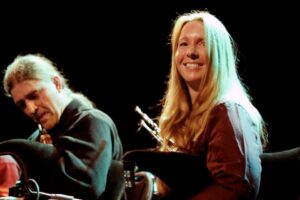
Guido Plüschke plays the Irish frame drum. He can no longer offer his bodhrán courses during the coronavirus crisis and is therefore switching to online courses. Guido is seeing more cohesion among people but is very disappointed by the German support for artists.

This is the third article in the series about the lives of folk musicians during the coronavirus crisis.

How do you feel about the current situation in Germany?

People approach each other more with a certain safety distance. They are more considerate, don’t grumble so much and help each other. There is much greater cohesion. Assholes always remain assholes.

How did it start for you and what were your thoughts?

The first concerts were canceled in mid-March and I thought: “Here we go!”. And shortly afterwards: “I have to do something quickly now, otherwise this is going to be very unpleasant”.

What has changed for Guido Plüschke?

I can no longer do my gigs and concerts. This means I can no longer do everything I’ve built up over three decades. We are moving closer together with the family and I have more time for our daughter. For whatever reason, I have more energy than before and I’m trying to put it to good use and get new online/digital projects off the ground. And I can’t even go to a session to casually play a few sets with friends and like-minded people.

How are you getting through the crisis?

I’m looking ahead and trying to reposition myself. My family, my friends and the people who are kind to me give me a lot of strength.

What do you observe in everyday life?

People help each other more. Many people are in the same boat. People who were previously competitors are suddenly talking to each other. Unimaginable before. And suddenly things that were supposedly impossible are possible!

Where do you go for help?

Family, friends, the net community, aid funds that are not from the state and have understood what it means to be an artist, especially a musician.

What scares you?

That we/my family are slipping more and more into the debt trap and then there is no helping hand. We don’t have any reserves and after 2-3 months things get dicey. And, of course, the uncertainty as to whether the new online projects will bring in the hoped-for and needed replacement income at all.

That my parents fall ill. They’re both over 80, and that things will go back to the way they were before. Art is officially very important and great, but it was rarely really well paid. And after the crisis, people have really little money and their earnings are even lower than before.

What gives you courage?

That many people offer me help and really help me. With advice, action and patience. This great, positive energy is the power for my personal batteries.

Who would you like to say thank you to?

To everyone who helped me and believed in Guido Plüschke and my projects beforehand. But also to the people who are now on the “front line”, pulling the cart out of the mud for very little money. Hospital staff, police, firefighters, food retailers, refuse collectors, nurses, etc. They do what, many with a lot of money shuffle their assets back and forth trying to save them. In the end, we all have to bite the dust. The shirt has no pockets and the ferryman plays neither major nor minor…

What is your view of the future?

We will all have to rethink our approach and position ourselves as broadly as possible. Only live concerts and real workshops are thin ice on which we are moving. The online/digital products need to be expanded more. I’m trying to stay at home more. I had already reduced the workshops anyway.

What annoys you?

That most aid packages are not made for the small artist. The basic conditions are created for entrepreneurs and not for art. Many of those who get help now will have to pay it back because the conditions for the state are not right during an audit. In the end, it’s the same as it was before, art flies under the radar, lives from hand to mouth and is inventive.

And that politicians are not taking a tough stance against usurious rents. Many people are having the roof literally eaten off their heads by rents in this crisis. Many rents are so high that you can only pay them with two salaries. One person working and one staying at home to look after the children is only possible in the rarest of cases. Where is this going to go…

Guido Plüschke also speaks his mind on YouTube:

https://www.youtube.com/watch?v=QLUL_Fe6rQw

You can find more reports on how artists from the folk scene are dealing with the coronavirus in the lead article “Folk musicians talk: The corona crisis is hitting us hard“.
Posted on — Leave a comment

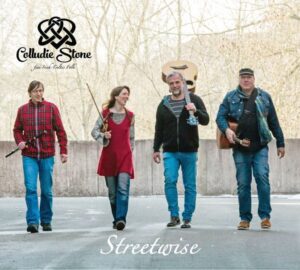
“Streetwise” by Colludie Stone: Irish folk from Swabia

The new album “Streetwise” by the Swabian folk band Colludie Stone has arrived, inspiring us to write a music review. The band has crafted a CD that’s incredibly diverse and atmospheric; the recording quality is very high, both technically and musically. The lineup change two years ago was a huge success. The two new musicians create a rhythmic and, at times, dreamy folk band sound that’s a pleasure to listen to.

Album “Streetwise” for the 10th Anniversary

On November 11, the Swabian folk band Colludie Stone released their second album, “Streetwise.” We’re taking this release—along with the band’s 10th anniversary—as an opportunity to give this CD a closer listen—and we’re thrilled. In recent years, the folk band has caused a sensation in the Irish folk scene in southern Germany and Italy. The band has performed numerous shows and has already been booked by television (ARD/SWR) for a major appearance. The new CD, “Streetwise,” was produced by the well-known Artes Studio with Jürgen Treyz (CARA)—and we can reveal this much: The effort was well worth it, and the quality of the CD is outstanding.

New Lineup—A Breath of Fresh Air for Colludie Stone

The band consists of four musicians and plays authentic Irish-Celtic folk music. In addition to traditional instruments (flute, violin, guitar, vocals, percussion), they incorporate numerous Irish folk instruments. This creates a rich, varied sound that the four musicians creatively adapt in a wide range of ways. In 2016, two new musicians joined the band (Robby Iacuzzi: flute, vocals, guitar / Birgit Aubert: violin, vocals), who have proven to be the perfect fit. Their virtuosity and ornate style are typical of Irish music and complement the band perfectly.

The Versatile Sound of the Band “Colludie Stone”

Just under five years have passed since the release of their first album, “Native Land.” The focus has shifted from purely vocal pieces to a wonderful blend of instrumental and vocal tracks. This is due in large part to the musical influence of the two new musicians. In addition, the overall sound has evolved in a positive way and is now even more refined and varied than on the first album. The musicians’ interplay is more virtuosic, and the folk band’s repertoire is broader and more diverse.

The superbly performed album “Streetwise”

The album “Streetwise” by Colludie Stone

“Streetwise” is a consistently excellent album, and I thoroughly enjoyed listening to the tracks while preparing this music review. Purely instrumental pieces alternate with vocal tracks, creating an impressive overall structure for the CD. In the instrumental tracks, the four musicians’ whimsical rhythmic arrangements really shine, and they showcase their virtuosity particularly well in “Sgt. Earlie’s Dream.”

With ease, Iacuzzi and Aubert perform a duet whose dance-like rhythm sparkles with every passing second. Among the songs—all sung with consistent atmosphere and the purest intonation—the ballad “Follow The Heron” stands out, inviting the listener to dream. At this point, I’d like to praise the artful structure of the individual tracks, which is masterfully brought to a close in the final number, “Willy Crotty.” Here, a track lasting over 7 minutes never gets boring, and the vocals, instrumental textures, and accompaniment are so artfully varied that time flies by.

Enthusiasm and Commitment

The musicians told us in a letter that, for professional reasons, the recording of their album took nearly a year. The enthusiasm for the music and the dedication of the four band members are evident in every sentence. The band’s popularity continues to grow, and their concerts are usually sold out. After the release of this electrifying CD, this success is well-deserved, and we’re thrilled about their hard-earned achievement.

Live performances in 2020

This brilliant and virtuosic album, which also features dreamy and melancholic tracks, is a must-have for any folk CD collection. The overall quality of the CD is very high, and the ensemble playing is impressive. Rarely do we hear an album so well-crafted and diverse—high praise is due to everyone involved! In 2020, there will be nearly 20 concerts in southern Germany where you can hear Colludie Stone live, for example on June 20 in Reutlingen, on July 16 in Stuttgart, or on October 2 in Vaihingen—it’s well worth it!

Posted on — Leave a comment

Edda Sånger – Nordic, folky, epic!

[english version below]

Nordic mythology full of deities and tragic fates!

It’s no surprise that when we listened to Strömkarlen’s new album, we immediately fell into a feeling of connection with the music, with the lyrics (even though we can’t understand them), and with the dedication of the trio and their guest performers.
Continue reading Edda Sånger – Nordic, folky, epic!

Posted on — Leave a comment

Tumult from Denmark!

[youtube https://youtu.be/s9KPYgocfKY]

[English version below]

You just can’t keep your feet still. Mikkel Grue and Jørgen Dickmeiss kick things off with acoustic guitar and bodhran, inviting everyone to dance. In their video “Die Katze im Sack” (which translates to “The Cat in the Bag”), Tumult from Denmark encourages viewers to listen with a spring in their step and tap along. At the end, the folk quartet rounds out their song with a key change. Wonderful!

Continue reading Tumult from Denmark!

Posted on — Leave a comment

Workshop: Stòras-Òran – Four days of music, dance & singing

“Stòras-Òran” is Gaelic and means treasure trove of songs. It is the name of the winter workshop in Neu-Anspach. Four days of workshops are offered for bagpipes, Gaelic and medieval songs, Scottish, Breton and medieval dances, market bag, bòdhran and harp. Participants book their accommodation in the “Old School”, where the courses also take place.
Continue reading Workshop: Stòras-Òran – Four days of music, dance & singing

Posted on — Leave a comment

Fat Lazy Dogs – Sunday Afternoon (2014)


Today we’re featuring the album “Sunday Afternoon.” It was produced by the “Fat Lazy Dogs” from Frankfurt am Main in the summer of 2014. The title of the first track, “A Glass of Schobbe for Louie,” at least, suggests that the band’s linguistic roots lie in the Rhine-Main region.

The album

The Fat Lazy Dogs make mostly Scottish, purely instrumental folk music. The ten tracks consist partly of slow airs, marches and dance pieces. Various bagpipes are played, accompanied by guitar, whistles, fiddle, bodhran (Irish frame drum) and djembe (African drum).

Occasionally the Scottish terrain is left behind and pieces from Ireland, Brittany, Scandinavia and medieval music from Germany are added, incorporating instruments such as the Uilean Pipe (Irish bagpipes), medieval bagpipes and Jew’s harp.

The tracks

Thomas Köstler and Senta Schöne
  1. “A Glass of Schobbe For Louie”
  2. “The Old Set”
  3. “Welcome To Brittany”
  4. “Mac Arthur’s Road”
  5. “The Piper’s Ceilidh”
  6. “A Breton Air”
  7. “The Grinder”
  8. “Trip To Scandinavia”
  9. “Ale is Dear”
  10. “The Wise Maid”

The album “Sunday Afternoon” begins with sounds from the Irish pub. The first traditional song can be heard, followed by a guitar solo and bodhran drum beats. Suddenly the bouzouki kicks in. The melody speeds up, then slows down again. Tunes change spontaneously and provide a change of scene.

More well-known melodies await, such as the traditional piece “Tri Martalod”. The bagpipes play in several voices. The sounds of a jew’s harp are surprising. Dance songs are used and the uillean pipe can be heard.

The piece “Trip to Scandinavia” begins with a recorder in waltz time. The dance step is maintained by two further tunes in the same piece, played comfortably on Scottish smallpipes. The pieces “Ale is Dear” and “The Wise Maid” round off the album in an upbeat and cheerful mood.

The best tunes

Lars Pfeiffer

My favorite song? Really hard to say with such a great selection. What I remember most is “A Breton Air”, because it could almost be the soundtrack to an epic movie like “The Lord of the Rings” or “Braveheart”. I also think “Ale is Dear” is very successful, as it puts you in a good mood for spring, especially now in winter.

Conclusion

FAT LAZY DOGS combine various types of bagpipes—sometimes in polyphonic arrangements—to create magnificent compositions. Although “Sunday Afternoon” is their first album, these Scottish tunes, jigs, and dance songs immediately transport you on a dreamlike journey through the Highlands. These are truly beautiful pieces—purely instrumental, superbly and creatively played and composed. Diverse and atmospheric—this debut album by the “Fat Lazy Dogs” is simply a joy to listen to and comes highly recommended for every avid Scottish folk listener and all folk music fans.

Purchase CD

You can buy the album in the Fat Lazy Dogs store or on Facebook. Or you can write an e-mail to the band.

The band

FAT LAZY DOGS are Senta Schöne (smallpipe, whistle, fiddle), Thomas Köstler (smallpipe, borderpipe, bouzouki), Stefan Wagner (smallpipe, borderpipe, whistle), Lars Pfeiffer (medieval smallpipe, market bag, djembe, uilleann pipes), Markus Engelter (smallpipe, bodran) and Ralf-Daniel Wirth (guitar).

The six-member céilí band from Frankfurt am Main has been particularly passionate about Scottish folk music and its instruments for many years. They have been playing together for four years now and perform traditional Scottish pieces.

Upcoming dates of the band

Further links