
Today I received “Maxima Preconia,” an album by the medieval band “Musica Vulgaris.” But what’s really behind such a slightly provocative band name? I listened to the album and was surprised.
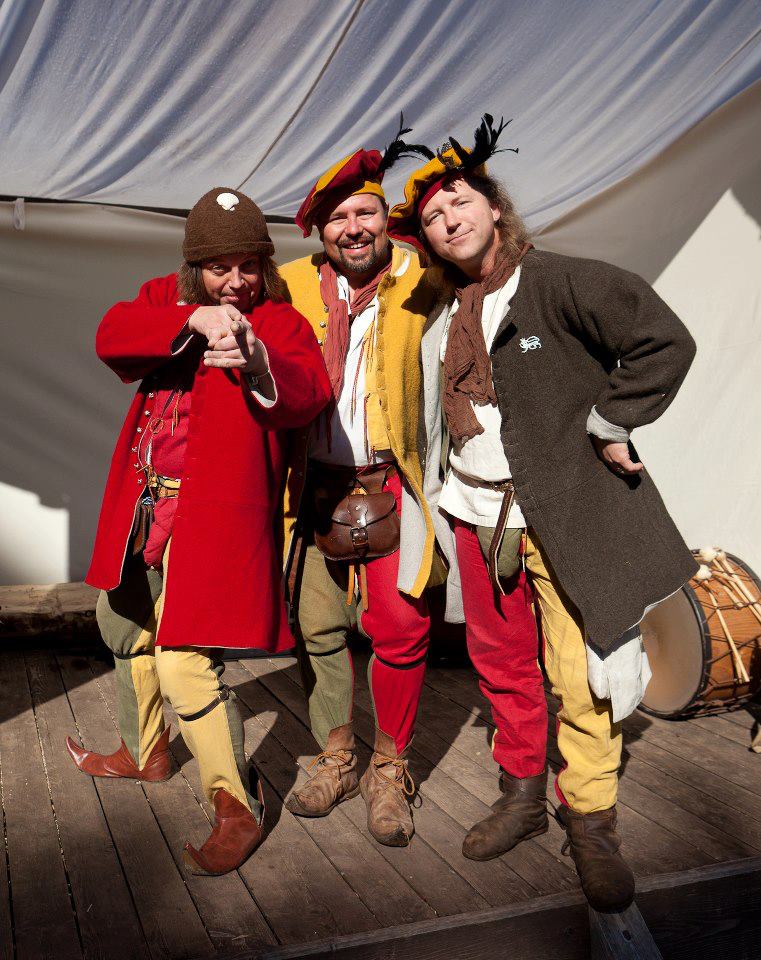
The first song, “Al’ entrada del temps clar,” has a rather minimalist feel. Three men with distinctive voices sing verses that sound slightly Italian, in a lively, upbeat style, accompanied only by a set of bells and a drum in the background. It could be a hiking song or a tavern song. One sings solo, then all three sing together in harmony. In fact, the trio is performing a traditional piece in the Occitan language from the 12th century.
Very beautiful sounds the next piece, purely instrumental, consisting of lovely harp, flute, partly chalumeau, percussion, a well-known piece from the Cantigas de Santa Maria from the 13th century called “Quen omagen (Cantiga 353)”.
“Bacche, bene venies” features rhythmic bagpipes and a hurdy-gurdy. This is followed by songs and chants that are clearly in praise of wine—and even more clearly, of Bacchus, the god of wine and fertility. Yes, this is where the three singers begin to live up to their band name, “Musica Vulgaris.” They sing, shout, and celebrate in the classic style of today’s “medieval” jugglers and bards, spreading good cheer.
Next up is “La rosa enflorece,” a traditional Sephardic piece from the 15th century—a story told through music and song with an Eastern flair, now less mocking and more inviting, taking us on a little dream journey. Very beautiful!
https://www.facebook.com/157473690966558/videos/450776918302899/
Twelve more songs follow, each one—right up to the very last—entertaining and arranged with great care. The collection includes songs in German and Old High German, traditional pieces from Scotland and France, dances from Brittany, and songs from the Middle Ages, sung by Detlef Fischbuch, Holger Fischbuch, and Frank Kummer, and accompanied by flute, gemshorn, bagpipes (including shepherd’s pipe, market bagpipe, Hümmelchen, smallpipe, Great Highland bagpipe, Spanish gaita), Rauschpfeife, chalumeau, trombone, lute, hurdy-gurdy, cittern, lute, guitar, harp, davul, darbuka, frame drum, Trumscheid, and other percussion instruments.
Conclusion: They are not that vulgar!
Outstanding acoustics and rousing vocals—partly reminiscent of a radio play, partly danceable, but definitely mischievous—that’s the 2011 album “Maxima Preconia” by “Musica Vulgaris.” Although the album looks rather unassuming at first glance and the booklet is quite simply designed, featuring photos of the guys goofing around in medieval garb, the album comes highly recommended for folk music lovers, dreamers, and fans of medieval fairs!
- Order the band’s self-released album at: info@musica-vulgaris.de
- For more information, visit the band’s website

