
On December 6, 2019, the Luxembourg band ROME released their second album in a year. This high level of productivity makes the new album well worth a listen. In this CD review, I explore just how good two albums released in a single year can be. The contrast between the two albums is clearly audible, even though ROME remain true to their style. The story behind the making of “The Dublin Session” is unusual.
14th folk album by the Luxembourgish folk band
For 15 years, ROME has been releasing albums that are characterized above all by their great diversity. Although the quartet led by Jérôme Reuter describes its style as “Chanson Noir,” many CD reviews tend to classify their music as “Folk Noir” or “Neofolk.” As a result, their music appeals to a wide range of listeners. Their new album, “The Dublin Session,” will not only appeal to die-hard fans but will also captivate a new audience. This 14th studio album is sure to appeal to fans of Irish folk.
Born of spontaneity
As the title “The Dublin Session” suggests, the songs were recorded in the Irish capital. Bandleader Jérôme Reuter describes how the project came about spontaneously: Some musician friends had access to a studio and organized a session, for which he wrote the songs within a few weeks. Due to time constraints, there was no room for lengthy planning or meticulous rewriting of individual lines of lyrics. ROME limits itself to nine relatively short songs, whose content draws primarily on Irish legends and politics. In doing so, they build on their previous album, “Le Ceneri Di Helidoro”—a powerful, almost aggressive album that focuses on general political conditions and poses provocative questions about something enduring.
Traditional Instruments and Modern Guitars
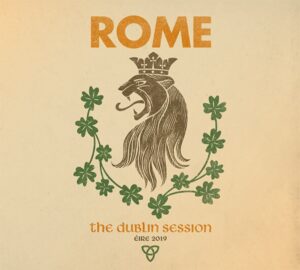
“The Dublin Session” opens with an old poem recited in Gaelic by fellow artist Brian Brody. This lends the current album a sense of timelessness. Next comes “Antenora,” the first song with an Irish flair. Although musically it’s still quite simple and slightly melancholic, it already hints at the songs to come, which feature traditional instruments. As the album progresses, banjo, fiddle, and uilleann pipes are repeatedly woven into the mix alongside rhythmic guitar sounds that never take center stage. Instead, as with most of ROME’s other albums, the focus is on Reuter’s resonant voice.
ROME releases two German songs
On the third song, ROME is joined by Swedish musician Thåström, who has previously appeared on their albums. With the following track, “Holy Ennui,” ROME explores the nuances of Irish folk. They don’t just use the traditional instruments mentioned earlier. The rhythm is also faster and reminiscent of typical pub music, the kind people in Ireland sway to and sing along with. It’s also very easy to sing along to ROME’s songs, as the lyrics are sung clearly. The two songs “Vaterland” and “Mann für Mann” even feature German-language lyrics.
“The Dublin Session” – Irish Folk for Home Listening
The various languages used on the album place “The Dublin Session” in the context of ROME’s previous albums, which consistently advocate for nations to live together in harmony. With their latest album, the band ROME presents excellent Irish folk music with profound lyrics about political differences and peaceful coexistence. In doing so, the Luxembourg-based band captivates its listeners and brings the Irish way of life right into their living rooms. Unfortunately, at the time of this CD review, no concert dates have been announced, so fans will have to be patient to hear one or two songs from the current album “The Dublin Session” performed live.

