Posted on — Leave a comment

“The Archer’s Parade” by Enter The Haggis: Canadian Celtic rocks!

What do musicians do in times when they are not allowed on stage? They make the best of it. Canadian Celtic rockers Enter the Haggis released their album “The Archer’s Parade” at the end of March after a creative break of several years. Now, in September, the band has officially presented their record.

Brian Buchanan and Trevor Lewington present the 10 new songs on their Facebook page in the form of an online listening party. Accompanied by posts from numerous Haggis Heads. This was the perfect occasion for Folk.World to ask the band for an interview for a Folk Review.

“Enter The Haggis” – Roots rock with Scottish accents

Haggis Heads – that’s what the worldwide followers of the Celtic rockers from Toronto have been calling themselves for over two decades. “Enter The Haggis” has existed since 1995 and was founded by Craig Downie. Born in Scotland, his parents emigrated to Canada when he was just seven years old. But the boy remained true to the sounds of his homeland, learned the complex playing of the Highland bagpipes and drummed up his first bandmates in the nineties. Incidentally, haggis is Scotland’s hearty national dish par excellence. Is it any wonder that Craig Downie felt inspired to name the band?

Album "The Archer's Parade" by Enter The Haggis
Album “The Archer’s Parade” by Enter The Haggis on amazon.de

With cult groovy folk-rock songs such as “One Last Drink”, the Canadians transported their good-humored fans to the world of the Highlands and Scottish pubs. Almost all songs from past albums have a common denominator: the rousing rhythm accompanied by the melodious playing of the violin and bagpipe. Influenced by various rock bands such as the Beatles, Led Zeppelin, Radiohead and the Smashing Pumpkins, “Enter The Haggis” have developed their own unmistakable style.

The Celtic rock quintet currently consists of Craig Downie (Highland Bagpipes, vocals), Trevor Lewington (guitar, vocals), Brian Buchanan (violin, guitar, vocals), bassist Mark Abraham and drummer Bruce McCarthy.

“The Archer’s Parade” – Unique creative process

The statements on the Facebook page and the interview with the band illustrate the unique creation process of “The Archer’s Parade”.

This is because the current album differs from its predecessors in several respects. For example, the previous concept albums were each recorded in booked studios. The songs on “The Archer’s Parade“, on the other hand, were written over a period of three years and were recorded on tour in hotel rooms or on the tour bus, among other places. Drummer Bruce McCarthy mixed most of the demos made on the road himself. He had previously recorded his parts in his studio. On the tracks “Into The Lion’s Den”, “Western Shore” and “The Split Crow Bar”, a friend of the band, Zach McNees, put the finishing touches to the tracks.

Thematically and musically, “Enter The Haggis” is increasingly inspired by authentic roots rock. Artists such as Bob Dylan, Van Morrison and Ryan Adams left their audible legacy on “The Archer’s Parade”, as did the contemporary groups “Blue Rodeo” and “The Jayhawks”.

As the band revealed to Folk.World, “The Archer’s Parade” consists of exclusive favorite songs selected from a long list. In my view, a promising guarantee of quality.

“The Archer’s Parade” – my personal folk review

“Enter The Haggis” didn’t promise too much in the interview. The 10 different songs convince with honest lyrics and a sophisticated, experimental crossover mix.

Melancholic country and folk ballads (“Gone”, “Whippoorwill”) and straightforward hard rock tracks such as “Western Shore” form a charming contrast. “Western Shore” is a purist rock song that lives from the slightly roughened vocals of Scotsman Craig Downie and his dynamic bagpipe playing.

The album begins with the title track “The Archer’s Parade”, which has the feel of a protest song with its fast folk rhythms and rebellious lyrics. The energetic bagpipe underlines the defiant content. “Dryden Mine” and “Shangri La” in particular contain further social criticism. Dryden Mine” is about a young blind worker who stoically comes to terms with his hard life underground. Musically, the song can be categorized as Irish folk rock, in which the accompanying banjo and violin are characteristic.

“Shangri La” is about the violent nature of mankind, which makes peace per se impossible. Nevertheless, the song conveys a hopeful appeal for tolerance. The pure country song in a skiffle rhythm dispenses with any folk influence and inspires with a harmonica accompaniment a la Bob Dylan.

My favorite is “Into the Lion’s Den”. The rock song impresses with its complex rhythm, pointed drumming, dominant violin solos and harmonious choir vocals. The fanfare tones of the Moog Slim Phatty add fresh electronic accents and are somewhat reminiscent of the 70s.

“Enter The Haggis” – an outlook

“The Archer’s Parade” impressively proves that “Enter The Haggis” has become more experimental. The Celtic influence can no longer be heard in every song, as pure country songs like “Shangri La” make clear. As Trevor Lewington indicated at the Facebook Listening Party, the direction is moving towards more individuality. Contemporary influences will always play a role for the band. Haggis Head – you can look forward to it!

“The Archer’s Parade” in times of Corona

Due to the corona crisis, “Enter The Haggis” has canceled the album release tour. Many festival concerts in the summer have been completely canceled or postponed. Unfortunately, this is not always clear from the tour calendar published on the band’s website.

Until then, the Canadians have been presenting a worthwhile alternative program. When the listening party for “The Archer’s Parade” went online at the end of March, the Haggis Heads were so enthusiastic that listening parties were also released for the previous albums.

“Enter The Haggis” for Folk Review: “These are difficult times, but we are trying to make the best of it and appreciate that we are in a better and safer situation than many people around the world.”


Further contributions:
    Posted on — Leave a comment

    “Life on a Ferris Wheel” by The Feelgood McLouds rocks!

    Imagine entering a run-down music bar. There is a big crowd. It’s incredibly loud. The floor is sticky with spilled liquid. Waiters are balancing trays through the crowd. Beer sloshes in the glasses on the tables. There is a band on the small stage with too many people playing for there to be enough room for everyone. The bass player hits the singer in the head with the mechanics. The banjo player knocks over the drummer’s cymbal stand. The atmosphere is exuberant. Suddenly the whole room is screaming. What’s happened? Everything’s fine – they’re just singing. That’s the chorus.

    This is what it would normally have looked like when The Feelgood McLouds release their new album “Life on a Ferris Wheel” on May 8th on Wolverine Records. For now, the virus is throwing a spanner in the works. The poorly rinsed glasses of this music pub would be a serious danger. Fortunately, we are allowed to pop a silver disk into the CD player. There’s a cold beer in the fridge. And off we go with the album review.

    Six New Dubliners

    The Feelgood McLouds play Celtic punk. The six Saarlanders describe themselves as a younger version of the Dubliners, if they were influenced by punk. However, the musicians insist that they are more hard-drinking than the Dubliners. After their debut in 2017, “Life on a Ferris Wheel” is the band’s second album.

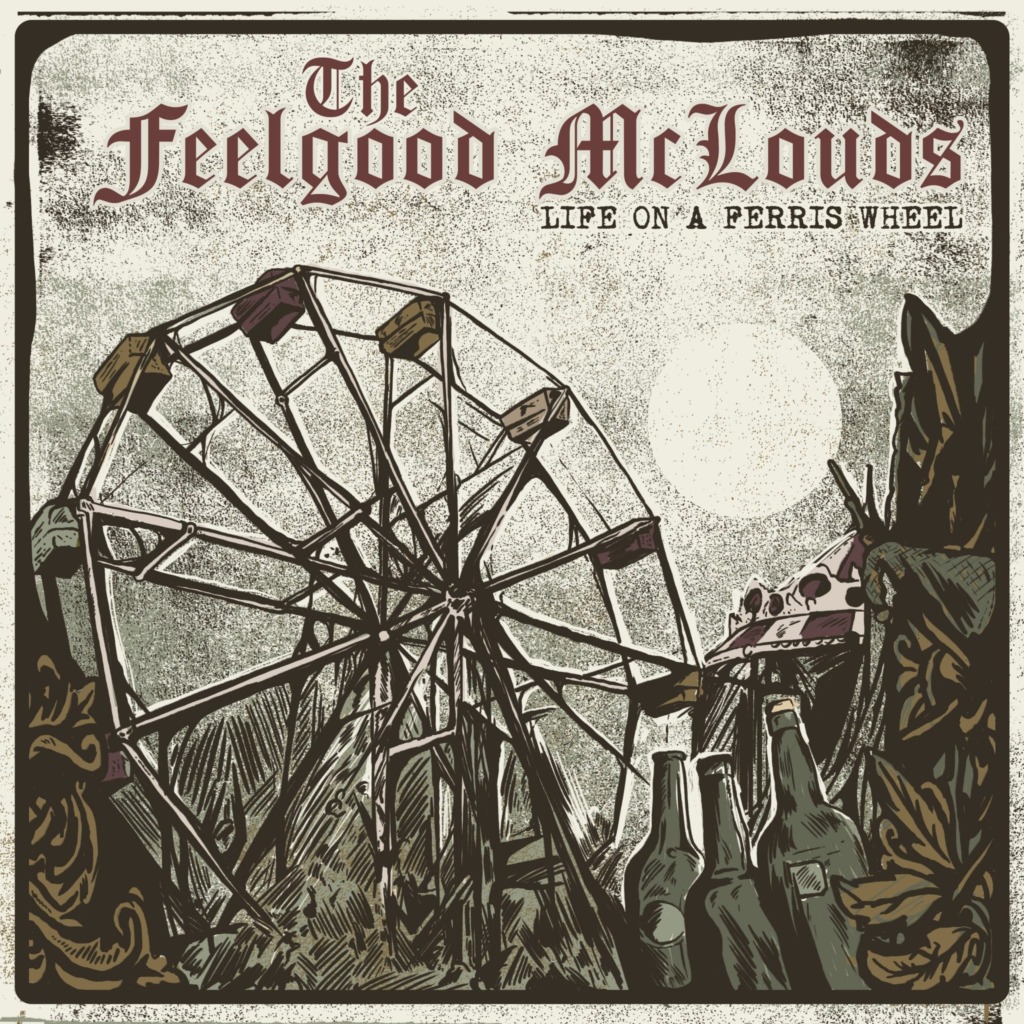
    Album "Life on a Ferris Wheel" by The Feelgood McLouds
    Album “Life on a Ferris Wheel” by The Feelgood McLouds on Amazon.de

    In addition to guitar, bass and drums, banjo, accordion, tin whistle and bagpipes can often be heard. Banjo and accordion were not on the first album. On “Life on a Ferris Wheel”, everything also sounds a little more sophisticated and mature. The range of influences has increased. For example, “Lovers and Friends” is a ska number for long stretches. In “Off the Rails” you can hear a banjo playing a bluegrass theme. With “In our Pup”, there is even an almost quiet song on this album.

    The Feelgood McLouds have expanded their possibilities. They are starting to play with the genre. As a Celtic punk fan, you can still remain relaxed. The energy of punk can always be felt and themes from Celtic folklore are constantly cropping up. There is also a roaring male choir in every song! When listening to “Life on a Ferris Wheel”, you’re bound to think of The Pogues more than once. The Feelgood McLouds have to be measured against the forefathers of the genre. The band’s lyrics are mostly about partying and drinking. Sometimes the musicians also address more serious topics. In “Spineless Mass” they even call for a riot.

    Celtic Saarlanders

    When musicians play a genre that is associated with a specific place or landscape, the question arises as to where these musicians come from. Can someone who grew up in the Saarland deal with the traditions of Irish and Scottish folklore?

    The question of authenticity is justified, but it seems a little academic to me. We wouldn’t reject a country singer from New York because he wasn’t born in the Appalachians. We wouldn’t deny a Japanese violinist a feeling for Viennese classical music.

    First and foremost, I can hear the joy of music in The Feelgood McLouds. What the musicians deliver on “Life on a Ferris Wheel” is genuine. They write their songs themselves. They hammer away on their instruments. They sweat. They grin. I wouldn’t mind if alphorns were used on the next album. Maybe a mariachi trumpet would be even better. The band could do something really crazy and sing a song in a Saarland dialect.

    Back on stage

    The concert in the run-down music pub described at the beginning will not take place for the time being. But you will have a lot of fun when “Life on a Ferris Wheel” booms out of your speakers. And watch the video for the song “Moonshiners” right after reading the album review. The Feelgood McLouds will return to the stage. The band’s music belongs on stage. Everyone sings along! Then there’s another beer.


    Further reviews:

      Posted on — Leave a comment

      “Undaunted” by STOUT aims to reinterpret Irish folk music

      With “Undaunted,” the duo STOUT has released its second album. Folk.World takes this opportunity to take a closer look at the band’s music in this review . The band proudly claims to want to breathe new life into Irish folk. Have they succeeded in doing so with “Undaunted,” which means “fearless” in English? Here you can learn more about the two passionate musicians, Mario Kuzyna and Simon Scherer, and their approach to Irish classics.

      “Undaunted” – Well-Known Classics and Original Compositions

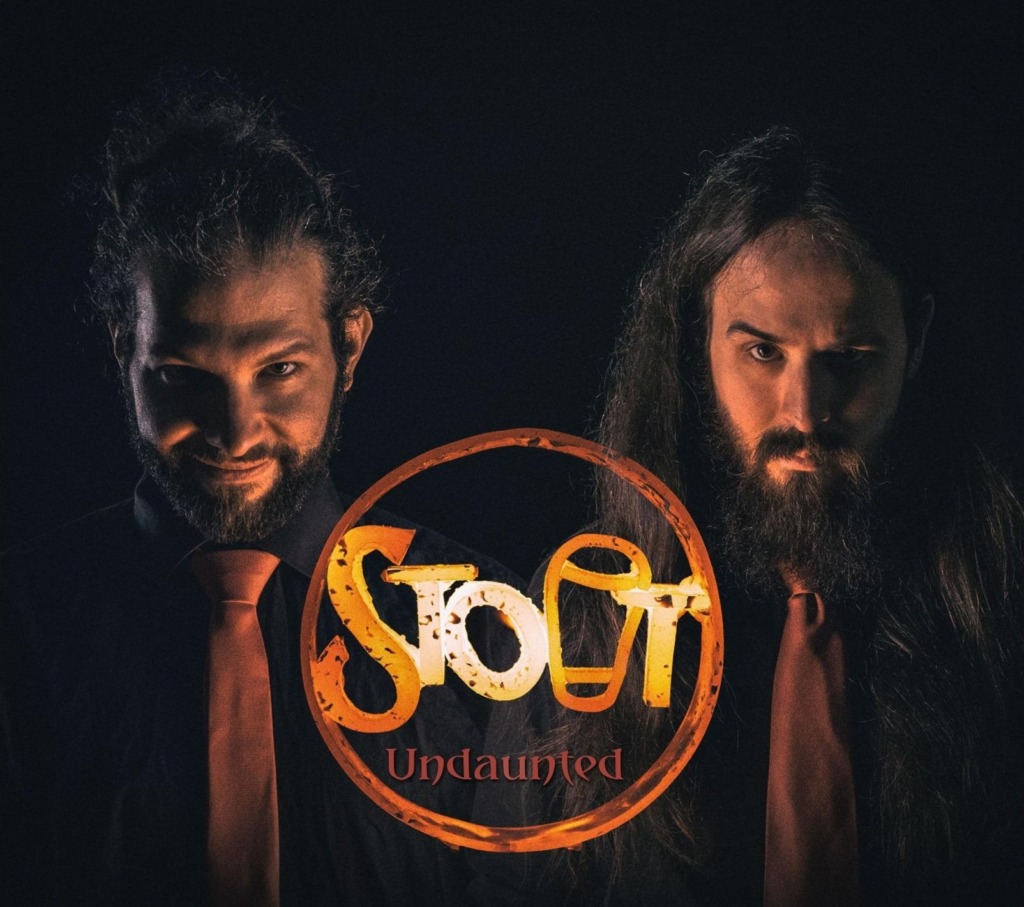
      Cover of the album "Undaunted" by STOUT
      Cover of the album “Undaunted” by STOUT on Amazon.de

      When listening to the album, it quickly becomes apparent that the mix of reinterpreted songs and original tracks is well-balanced. From the very beginning, familiar songs like “Whiskey in the Jar” sound familiar. This helps you, the listener, place STOUT’s songs in context. On “Undaunted,” “well-known” and “familiar” certainly do not mean “old,” “clichéd,” or “boring.” It’s not really accurate to call this a reinterpretation. What the two musicians present uses familiar building blocks to create something new and fresh. This music remains firmly rooted in the Irish folk tradition. Songs like “Fiddler’s Green,” which were formative for the genre, no longer sound nostalgic. The songs on the album “Undaunted” come across as fresh and well-crafted. Such a feat is possible when the musicians have a deep understanding of this music. STOUT’s album clearly embodies both qualities. Although it is only the second album by the band, which was founded in 2013, Folk.World attests to the impressive maturity of “Undaunted.” This maturity is evident in every song.

      Virtuoso ensemble playing and audible harmony

      With a duo like STOUT, there are no compromises. The first time I listened to “Undaunted,” it was clear that none were needed. The talent of these two virtuosos, with their impressive vocal range, really shines through. It takes courage to reimagine well-known classics from the ground up without letting them lose their soul. It’s even harder to integrate new creations into this framework so that they fit in seamlessly. Colorful, well-thought-out, emotional, and fresh—that’s the impression the album leaves after listening. The duo seems to have grown closer since their formation. Especially in the original compositions, there’s a sense of continuity that’s slowly becoming a hallmark of STOUT.

      “Undaunted” combines a spirit of experimentation with a clear goal

      Compared to their first album, “Undaunted” sounds more conceptually driven, and STOUT stand out more clearly as artists. Folk.World is delighted to see that the duo is keeping their spirit of experimentation alive and expanding on it even further. With “Undaunted,” it’s the result that counts—and it sounds really good. You’ll be amazed to discover that the conventional path isn’t the only way to reach your desired goal. “Undaunted” clearly breaks new ground. Things don’t have to be forcibly changed or reinterpreted. When classics are interpreted beautifully, melodically, and with musical understanding—as is the case with this album—an entire music scene can benefit from it.

      Experience STOUT live

      With up to 35 concerts a year, STOUT has a busy schedule. On stage, you can marvel at the vocal talent of these two musicians up close. And the show is certainly not to be missed. The emotional depth of some of the songs from “Undaunted” comes across best in a live setting. The band skillfully draws the audience into their performance. Have they succeeded in breathing new life into Irish folk? From Folk.World’s perspective, there’s no need for a spring cleaning, because tradition is constantly evolving. But STOUT leaves nostalgia behind and brings a breath of fresh air and fire to the genre. It remains exciting, and you can certainly continue to look forward to exciting news from the band.

      Posted on — Leave a comment

      “The Dublin Session” — ROME’s Irish album

      On December 6, 2019, the Luxembourg band ROME released their second album in a year. This high level of productivity makes the new album well worth a listen. In this CD review, I explore just how good two albums released in a single year can be. The contrast between the two albums is clearly audible, even though ROME remain true to their style. The story behind the making of “The Dublin Session” is unusual.

      14th folk album by the Luxembourgish folk band

      For 15 years, ROME has been releasing albums that are characterized above all by their great diversity. Although the quartet led by Jérôme Reuter describes its style as “Chanson Noir,” many CD reviews tend to classify their music as “Folk Noir” or “Neofolk.” As a result, their music appeals to a wide range of listeners. Their new album, “The Dublin Session,” will not only appeal to die-hard fans but will also captivate a new audience. This 14th studio album is sure to appeal to fans of Irish folk.

      Born of spontaneity

      As the title “The Dublin Session” suggests, the songs were recorded in the Irish capital. Bandleader Jérôme Reuter describes how the project came about spontaneously: Some musician friends had access to a studio and organized a session, for which he wrote the songs within a few weeks. Due to time constraints, there was no room for lengthy planning or meticulous rewriting of individual lines of lyrics. ROME limits itself to nine relatively short songs, whose content draws primarily on Irish legends and politics. In doing so, they build on their previous album, “Le Ceneri Di Helidoro”—a powerful, almost aggressive album that focuses on general political conditions and poses provocative questions about something enduring.

      Traditional Instruments and Modern Guitars

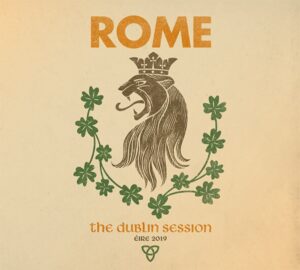
      Cover of the album "The Dublin Session" by ROME
      The album “The Dublin Session” by ROME on Amazon.de

      “The Dublin Session” opens with an old poem recited in Gaelic by fellow artist Brian Brody. This lends the current album a sense of timelessness. Next comes “Antenora,” the first song with an Irish flair. Although musically it’s still quite simple and slightly melancholic, it already hints at the songs to come, which feature traditional instruments. As the album progresses, banjo, fiddle, and uilleann pipes are repeatedly woven into the mix alongside rhythmic guitar sounds that never take center stage. Instead, as with most of ROME’s other albums, the focus is on Reuter’s resonant voice.

      ROME releases two German songs

      On the third song, ROME is joined by Swedish musician Thåström, who has previously appeared on their albums. With the following track, “Holy Ennui,” ROME explores the nuances of Irish folk. They don’t just use the traditional instruments mentioned earlier. The rhythm is also faster and reminiscent of typical pub music, the kind people in Ireland sway to and sing along with. It’s also very easy to sing along to ROME’s songs, as the lyrics are sung clearly. The two songs “Vaterland” and “Mann für Mann” even feature German-language lyrics.

      “The Dublin Session” – Irish Folk for Home Listening

      The various languages used on the album place “The Dublin Session” in the context of ROME’s previous albums, which consistently advocate for nations to live together in harmony. With their latest album, the band ROME presents excellent Irish folk music with profound lyrics about political differences and peaceful coexistence. In doing so, the Luxembourg-based band captivates its listeners and brings the Irish way of life right into their living rooms. Unfortunately, at the time of this CD review, no concert dates have been announced, so fans will have to be patient to hear one or two songs from the current album “The Dublin Session” performed live.