Posted on — Leave a comment

Bagpipe maker Matthias Branschke gives 3 valuable tips for beginners

Matthias Branschke is an instrument maker from Berlin. His range includes bagpipes based on French and Swedish models. Matthias is also a professional musician and lecturer at bagpipe workshops.

In his guest article for Folk.World, Matthias gives valuable tips for bagpipe beginners and aspiring bagpipe players.

Matthias Branschke, what is your motivation as an instrument maker?

I started playing the bagpipes at the end of the 90s at the age of 12. Due to the folk revival in the 1970s, the bagpipe repertoire at that time was mainly French-inspired. I was lucky enough to have lessons with Ralf Gehler, who was one of the first bagpipers in Germany to explore our German tradition. He awakened in me the desire to rediscover this tradition and to allow my own creativity to flow into it. To this day, I mainly play new melodies by colleagues and myself, as well as traditional repertoire from the German-speaking world.

And I became a bagpipe maker because I still see a lot of potential in the bagpipes, which you first have to tease out of them.
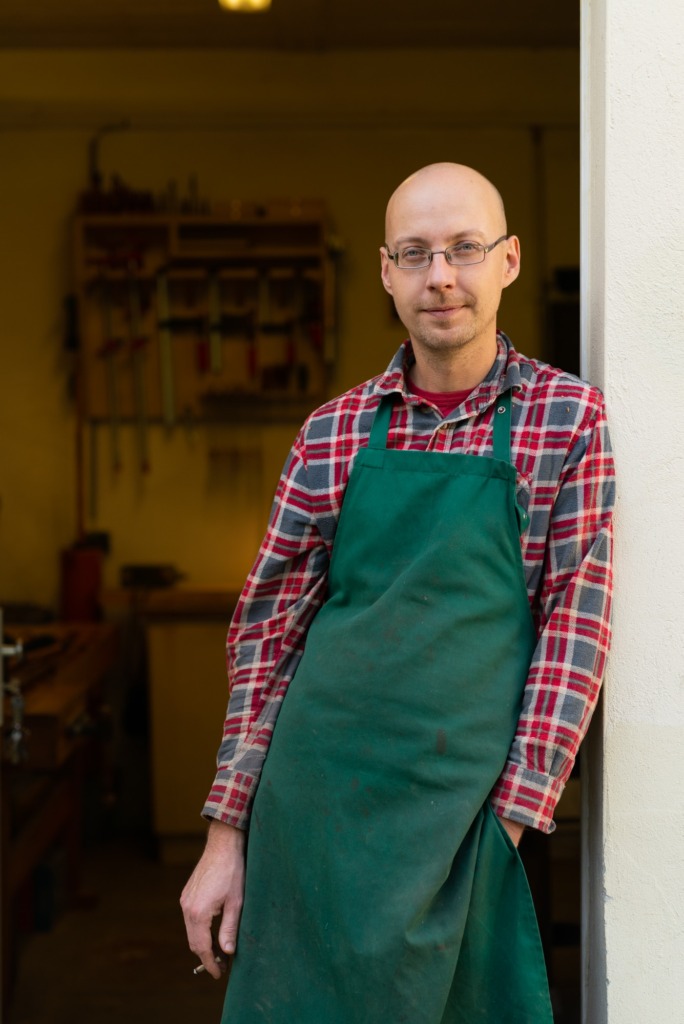
Matthias Branschke stands in the doorway of his bagpipe manufactory

Which bagpipes do you make?

I make two different types of bagpipes.

On the one hand, there are instruments with conically drilled chanter pipes and semi-closed fingering. These have a fairly wide range for a bagpipe, namely one and a half octaves, and are almost fully chromatic. I make these instruments in three different designs, namely

  • as a school instrument where the instrument is reduced to the essentials (a drone, blowpipe, chanter, bag and that’s it)
  • as a shepherd’s pipe, a historical design from the German-speaking world
  • and as a three-board instrument in which I install all the extras that seem useful to me as a musician on stage. The model runs under the name “Sessionprotz”.

I also make Swedish Säckpipor (plural of “Säckpipa”), an instrument with a cylindrical chanter bore and a reed in the chanter. You can “only” play one octave on it, but I find the Säckpipa particularly suitable for traditional playing.

How do I become a bagpiper?

If someone wants to get into the world of bagpipes, I recommend one thing above all: talking to people who already play. Course weekends are a good opportunity to do this, and there are a lot of them regularly throughout Germany. The world of bagpipes is incredibly diverse.

So if you still have no idea which of the 180 different types (!) of bagpipes you would like to play, I recommend that you attend a beginners’ course. In my opinion, the most flexible instruments for beginners are chanter pipes with semi-closed “French” fingering. Starting with such an instrument opens doors. You can always change over when you know exactly where you want to go.

If you want to play the bagpipes, you need one thing above all: patience. In principle, playing the bagpipes requires the same skills as any other instrument. You have to practise, and every now and then someone should check to make sure you’re not making mistakes.

Unfortunately, the density of bagpipe teachers is nowhere near as good as for classical instruments. However, there are quite a few courses, and lessons via Skype are now also a good alternative. Then it’s just a case of practicing, practicing, practicing.

Don’t get frustrated, no master has fallen from the sky yet, and with 20 minutes of practice a day you’ll make quick progress.

How much does it cost to play the bagpipes?

I think anything under 500 euros for a new instrument is probably a waste of money. There are some manufacturers who offer instruments in this price segment, but most of them are “Made in Pakistan” (no joke) and simply don’t work. It really starts at 1000 euros, but of course there is always room for improvement. It is best to get advice from an instrument maker or someone who has been playing bagpipes for a long time.

What you should spend on lessons and courses depends on how much input you need. If you have the chance to visit a teacher from your region, you should take the opportunity. It usually starts at around 30 euros per hour. Courses – which should not be underestimated as a social event – usually cost upwards of 150 euros for a weekend.

Which textbook would you recommend?

There are only a few textbooks for the bagpipes on the market. Technically good, although actually designed for a French style of playing and therefore highly recommended, is “Dudelsack spielen” by Bernard Boulanger. If you want to broaden your technical knowledge a little, you can find some books for Scottish bagpipes and other “insular” bagpipe types in the English-speaking world, but apart from Boulanger’s book, there are no other textbooks for the bagpipe types that I play.
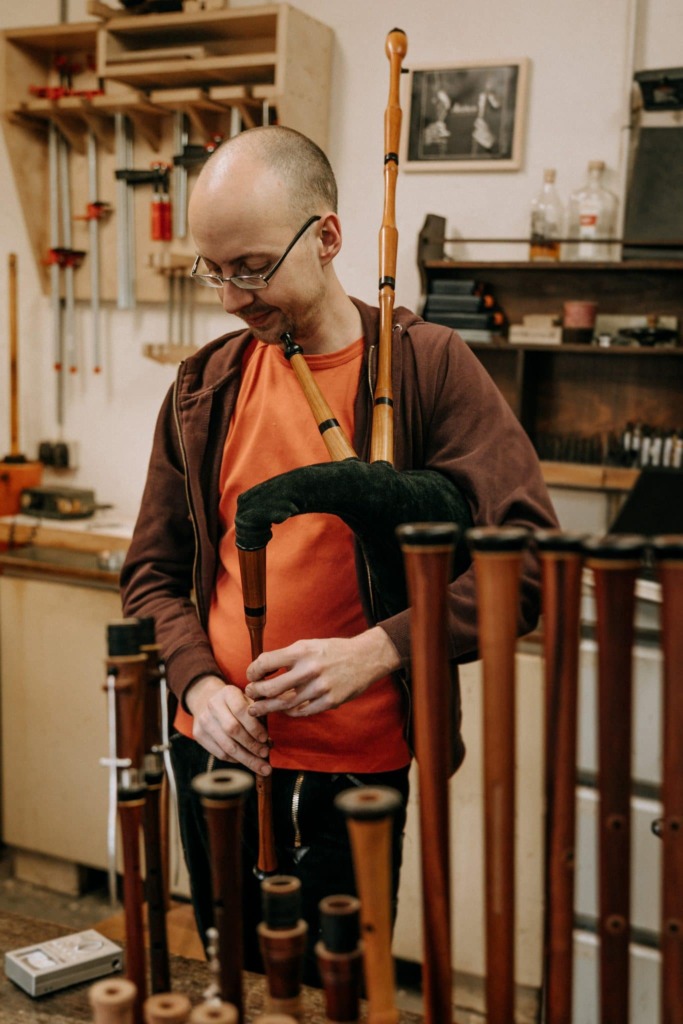
Musician Matthias Branschke plays the school model of his shepherd's pipe

Do the bagpipes come from traditional music?

The bagpipes were the instrument of traditional music in almost all of Europe until the 18th century. The disco music of the time was played on them, so to speak. Of course, people have always wanted to dance, and a bagpipe can play well acoustically on its own, so you can keep the costs down at a dance evening, only need one musician and the party can start. The bagpipes are therefore inextricably linked with traditional music.

Is there sheet music for traditional bagpipe music?

All the sources of traditional music have been written down by fiddlers. Therefore, the pieces often do not fit directly on the bagpipes. With a bit of skill, many tunes can be adapted. If you want to embark on the journey, I can definitely recommend a bit of music theory. A group of people with whom I am quite good friends have studied the subject intensively. If you want to take a look: Dance music archive

What would you like to pass on to us?

Go for it! If you’re interested in the bagpipes, you should give them a try and check out the instrument at
. The world of the bagpipes is incredibly fascinating and diverse, so it’s definitely worth a musical journey
.


Further contributions:
    Posted on — Leave a comment

    How Fleadh Is Coping with the COVID-19 Crisis and How Politicians Are Making Fools of Themselves

    Like all artists, the German band Fleadh can no longer perform Irish folk music on stage due to the coronavirus crisis. As a result, Fleadh reflects on the decimation of Homo sapiens and how populist politicians are currently making fools of themselves.

    This is the seventh installment in a series of articles about the lives of folk musicians during the coronavirus crisis.

    How are you experiencing the situation in Germany?

    So far, it’s all still bearable. In fact, the slower pace is actually quite nice. No contrails in the sky, less traffic, everything’s calmer. Those are the pleasant aspects. It also looks like the government has been handling things pretty well so far. However, as of today (March 29, 2020), it’s questionable whether that will continue. Whether the situation can even be managed in the long run.

    How did the crisis begin for you?

    At first, it takes a while for it to really sink in. Then all the gigs get canceled. Then you cancel the bus you were going to take to the gig. Then you start working from home—and it just keeps going like that.

    The problem is the unpredictability of the situation—its duration and intensity. It’s like an air raid: you pull your helmet down over your face, dig in, and hope you’ll come out unscathed.

    What has changed?

    For me personally, not so much, since I’ve always worked from home as a freelancer. It seems that cultural life as we knew it—of which the Fleadh was a part—is over for the time being. No more rehearsals, no more gigs—and it’s easy to figure out which organizers will survive if the situation drags on for a few more months, as suggested by
    .

    How are you getting through the crisis?

    So far, so good. Still healthy, the supply situation is under control, I haven’t run out of money, and even the weather is good. The air is clearer than ever. The quiet is so pleasant—strange in the midst of this dance of death.

    What scares you?

    That the situation will spiral completely out of control. After all, haven’t we been expecting this for a long time? That Homo sapiens—increasingly detached from their environment and extremely prolific—will have to be decimated?

    This has been clear since the ’70s, but it’s just been consistently ignored—in fact, things have only gotten worse. So, that could very well be it. The corrective. Not exactly encouraging, I know, but despite everything, we should remain realistic. Of course, there’s also the lingering fear that parents might be classified as a high-risk group
    , that things could escalate quickly, and that we might not be able to see our loved ones because of the quarantine situation—perhaps never again.

    That’s the bitter reality in Italy. Even here, some nursing homes are no longer accepting residents. These are real tragedies. And what’s yet to unfold in India, in the favelas of South America, and of course in Africa as well, will likely eclipse everything we’ve seen so far.

    What gives Fleadh hope?

    The fact that there’s clearly widespread solidarity and a sense of composure. The toilet paper hoarding was nothing more than a running joke—hardly a real problem. It’s also nice to see the right wing losing a massive number of votes. The fact that complete idiots like Bolsonaro are exposing themselves as such even in the eyes of their own voters is another positive outcome of all this.

    What is your view of the future?

    Admittedly, it’s not positive, which certainly stands in contrast to the generally very good mood we’re experiencing right now. But the global figures are just staggering.

    Posted on — Leave a comment

    “Life on a Ferris Wheel” by The Feelgood McLouds rocks!

    Imagine entering a run-down music bar. There is a big crowd. It’s incredibly loud. The floor is sticky with spilled liquid. Waiters are balancing trays through the crowd. Beer sloshes in the glasses on the tables. There is a band on the small stage with too many people playing for there to be enough room for everyone. The bass player hits the singer in the head with the mechanics. The banjo player knocks over the drummer’s cymbal stand. The atmosphere is exuberant. Suddenly the whole room is screaming. What’s happened? Everything’s fine – they’re just singing. That’s the chorus.

    This is what it would normally have looked like when The Feelgood McLouds release their new album “Life on a Ferris Wheel” on May 8th on Wolverine Records. For now, the virus is throwing a spanner in the works. The poorly rinsed glasses of this music pub would be a serious danger. Fortunately, we are allowed to pop a silver disk into the CD player. There’s a cold beer in the fridge. And off we go with the album review.

    Six New Dubliners

    The Feelgood McLouds play Celtic punk. The six Saarlanders describe themselves as a younger version of the Dubliners, if they were influenced by punk. However, the musicians insist that they are more hard-drinking than the Dubliners. After their debut in 2017, “Life on a Ferris Wheel” is the band’s second album.

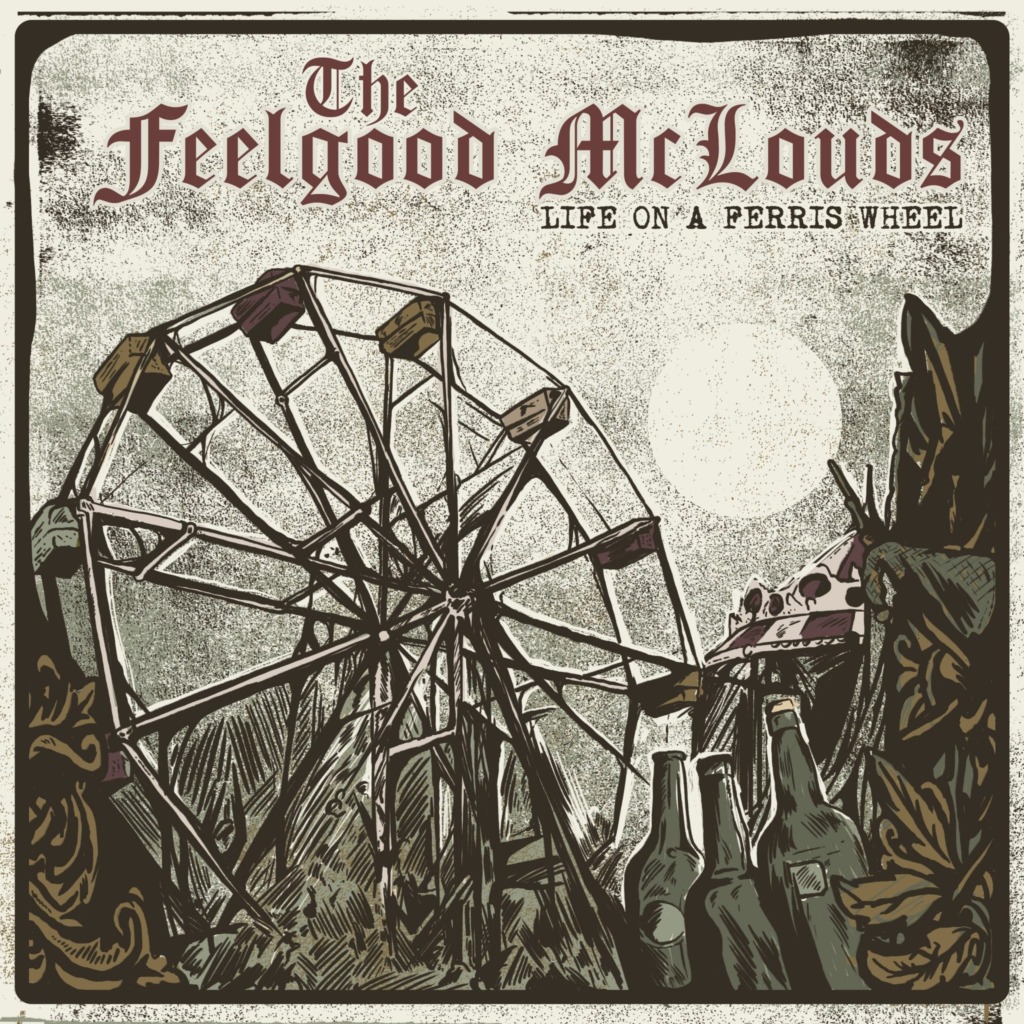
    Album "Life on a Ferris Wheel" by The Feelgood McLouds
    Album “Life on a Ferris Wheel” by The Feelgood McLouds on Amazon.de

    In addition to guitar, bass and drums, banjo, accordion, tin whistle and bagpipes can often be heard. Banjo and accordion were not on the first album. On “Life on a Ferris Wheel”, everything also sounds a little more sophisticated and mature. The range of influences has increased. For example, “Lovers and Friends” is a ska number for long stretches. In “Off the Rails” you can hear a banjo playing a bluegrass theme. With “In our Pup”, there is even an almost quiet song on this album.

    The Feelgood McLouds have expanded their possibilities. They are starting to play with the genre. As a Celtic punk fan, you can still remain relaxed. The energy of punk can always be felt and themes from Celtic folklore are constantly cropping up. There is also a roaring male choir in every song! When listening to “Life on a Ferris Wheel”, you’re bound to think of The Pogues more than once. The Feelgood McLouds have to be measured against the forefathers of the genre. The band’s lyrics are mostly about partying and drinking. Sometimes the musicians also address more serious topics. In “Spineless Mass” they even call for a riot.

    Celtic Saarlanders

    When musicians play a genre that is associated with a specific place or landscape, the question arises as to where these musicians come from. Can someone who grew up in the Saarland deal with the traditions of Irish and Scottish folklore?

    The question of authenticity is justified, but it seems a little academic to me. We wouldn’t reject a country singer from New York because he wasn’t born in the Appalachians. We wouldn’t deny a Japanese violinist a feeling for Viennese classical music.

    First and foremost, I can hear the joy of music in The Feelgood McLouds. What the musicians deliver on “Life on a Ferris Wheel” is genuine. They write their songs themselves. They hammer away on their instruments. They sweat. They grin. I wouldn’t mind if alphorns were used on the next album. Maybe a mariachi trumpet would be even better. The band could do something really crazy and sing a song in a Saarland dialect.

    Back on stage

    The concert in the run-down music pub described at the beginning will not take place for the time being. But you will have a lot of fun when “Life on a Ferris Wheel” booms out of your speakers. And watch the video for the song “Moonshiners” right after reading the album review. The Feelgood McLouds will return to the stage. The band’s music belongs on stage. Everyone sings along! Then there’s another beer.


    Further reviews:

      Posted on — Leave a comment

      Coronavirus: Guido Plüschke is disappointed with the German government

      Guido Plüschke plays the Irish frame drum. He can no longer offer his bodhrán courses during the coronavirus crisis and is therefore switching to online courses. Guido is seeing more cohesion among people but is very disappointed by the German support for artists.

      This is the third article in the series about the lives of folk musicians during the coronavirus crisis.

      How do you feel about the current situation in Germany?

      People approach each other more with a certain safety distance. They are more considerate, don’t grumble so much and help each other. There is much greater cohesion. Assholes always remain assholes.

      How did it start for you and what were your thoughts?

      The first concerts were canceled in mid-March and I thought: “Here we go!”. And shortly afterwards: “I have to do something quickly now, otherwise this is going to be very unpleasant”.

      What has changed for Guido Plüschke?

      I can no longer do my gigs and concerts. This means I can no longer do everything I’ve built up over three decades. We are moving closer together with the family and I have more time for our daughter. For whatever reason, I have more energy than before and I’m trying to put it to good use and get new online/digital projects off the ground. And I can’t even go to a session to casually play a few sets with friends and like-minded people.

      How are you getting through the crisis?

      I’m looking ahead and trying to reposition myself. My family, my friends and the people who are kind to me give me a lot of strength.

      What do you observe in everyday life?

      People help each other more. Many people are in the same boat. People who were previously competitors are suddenly talking to each other. Unimaginable before. And suddenly things that were supposedly impossible are possible!

      Where do you go for help?

      Family, friends, the net community, aid funds that are not from the state and have understood what it means to be an artist, especially a musician.

      What scares you?

      That we/my family are slipping more and more into the debt trap and then there is no helping hand. We don’t have any reserves and after 2-3 months things get dicey. And, of course, the uncertainty as to whether the new online projects will bring in the hoped-for and needed replacement income at all.

      That my parents fall ill. They’re both over 80, and that things will go back to the way they were before. Art is officially very important and great, but it was rarely really well paid. And after the crisis, people have really little money and their earnings are even lower than before.

      What gives you courage?

      That many people offer me help and really help me. With advice, action and patience. This great, positive energy is the power for my personal batteries.

      Who would you like to say thank you to?

      To everyone who helped me and believed in Guido Plüschke and my projects beforehand. But also to the people who are now on the “front line”, pulling the cart out of the mud for very little money. Hospital staff, police, firefighters, food retailers, refuse collectors, nurses, etc. They do what, many with a lot of money shuffle their assets back and forth trying to save them. In the end, we all have to bite the dust. The shirt has no pockets and the ferryman plays neither major nor minor…

      What is your view of the future?

      We will all have to rethink our approach and position ourselves as broadly as possible. Only live concerts and real workshops are thin ice on which we are moving. The online/digital products need to be expanded more. I’m trying to stay at home more. I had already reduced the workshops anyway.

      What annoys you?

      That most aid packages are not made for the small artist. The basic conditions are created for entrepreneurs and not for art. Many of those who get help now will have to pay it back because the conditions for the state are not right during an audit. In the end, it’s the same as it was before, art flies under the radar, lives from hand to mouth and is inventive.

      And that politicians are not taking a tough stance against usurious rents. Many people are having the roof literally eaten off their heads by rents in this crisis. Many rents are so high that you can only pay them with two salaries. One person working and one staying at home to look after the children is only possible in the rarest of cases. Where is this going to go…

      Guido Plüschke also speaks his mind on YouTube:

      https://www.youtube.com/watch?v=QLUL_Fe6rQw

      You can find more reports on how artists from the folk scene are dealing with the coronavirus in the lead article “Folk musicians talk: The corona crisis is hitting us hard“.

      Posted on — Leave a comment

      8 Folk Bands Share Their Stories: The COVID-19 Crisis Is Hitting Us Hard

      Around the world, the coronavirus crisis has turned the lives of billions of people upside down. The virus is dictating the daily lives of people across all income brackets. Folk.World wanted to know how folk musicians in Europe are currently coping with their lives. What thoughts, feelings, and challenges shape the musicians’ daily lives? The answers are varied and surprisingly similar.

      This article is the first in a series of interviews featuring artists such as Guido Plüschke from Germany and Tri Yann from Brittany, among others. Folk.World provides an overview here and will publish the artists’ detailed responses in the coming weeks.

      1. How Koenix from Switzerland Is Coping with the Coronavirus
      2. How Tri Yann Is Coping with the Pandemic Now
      3. Coronavirus: Guido Plüschke is disappointed with the German government
      4. WÖR has too much time on his hands during the coronavirus crisis
      5. Taberna Mylaensis believes Europe has a responsibility
      6. Anne Niepold: How Belgium Is Dealing with COVID-19
      7. How Fleadh Is Coping with the Coronavirus Crisis and Politicians Are Making Fools of Themselves
      8. Corona crisis: Schëppe Siwen sees humans as a plaything of nature

      A Major Setback for Folk Music

      Europe has been completely transformed by the virus. From one day to the next, new regulations went into effect: borders are closed, and rules are restricting daily life. How are musicians coping with everyday life during this forced hiatus?

      Dream Catcher (Luxembourg) and Schandmaul (Germany) describe the ambivalence of emotions—oscillating between hope and anxiety. Musicians, in particular, have been hit hard by the COVID-19 crisis. Many don’t have much in savings. Folk musicians often plan their gigs months in advance. Tour buses and accommodations are booked well in advance. On top of that, there are fixed costs like rent.

      Schandmaul Connects with Fans Online

      For Birgit von Schandmaul, the current situation is frightening and, above all, poses an imminent threat to the music scene’s very existence. On the other hand, she senses that people around her are becoming more mindful and that many are refocusing on what really matters.

      Birgit, too, didn’t take the whole coronavirus threat seriously for a long time and thought it was all just media hype. It wasn’t until she read a detailed statement from the Green Party online that she realized the primary goal is to protect at-risk groups and prevent the healthcare system from collapsing.

      The restrictions are severe. Schandmaul is no longer rehearsing or playing concerts. Their activities have shifted online. Nevertheless, Schandmaul is weathering the crisis with the power of music and plenty of nature!

      Birgit from Schandmaul is still managing to get by. If the situation persists, however, Schandmaul will have to consider seeking financial assistance.

      Folk musicians across Europe are facing a similar situation

      Many artists are in the same boat as Schandmaul. Anyone organizing a folk event has to coordinate schedules with one another. After all, folk artists also collaborate across national borders.

      Will the coronavirus crisis affect Europe? Hardly anyone believed that at the beginning! The musicians were initially united by disbelief, but then came to terms with the situation. Now they’re looking for new opportunities. Folk.World asked around and found the following across Europe:

      • At first, the virus didn’t faze many musicians. The coronavirus crisis seemed to them like hype, blown out of proportion by the media.
      • This was followed by a sense of disillusionment. The coronavirus crisis is cutting folk musicians off from the world. Many are working in isolation; some feel cut off. Those who live and work together consider themselves lucky.
      • Because of the coronavirus crisis, every musician misses group rehearsals and performances. Teaching is impossible or takes place via Skype.
      • The coronavirus crisis raises questions about the future. What will happen to gigs? Will there be government support for music? Especially for a “niche” like the cultural scene? Will social distancing measures remain in place for much longer? When will musicians be able to perform their folk music again?
      • The coronavirus crisis is forcing musicians to find unconventional solutions. As creative people, musicians in particular are quick to find new ways forward. The internet has now become essential.

      Similarities and Differences in Europe

      Many folk artists share similar experiences, whether in Germany, Switzerland, Luxembourg, or Italy. The virus is taking its toll: Of course, we miss personal contact with colleagues. But live music performances also thrive on interaction with the audience. What happens on stage is a reciprocal exchange between artists and listeners. An unknown virus suddenly creates fear where there used to be a sense of community. Thus, from one day to the next, the virus has thrown the lives of artists off course.

      Due to the forced isolation, many musicians have become more sensitive in their interactions with one another. They are worried about their loved ones. They are grateful for the work of caregivers, doctors, and others who are lending a helping hand.

      One positive aspect of the virus is the greater sense of calm everywhere. Nature has come into focus. People are friendlier and more helpful. However, the virus leads not only to isolation but also to mistrust and fear. This poisons interpersonal relationships. Taberna Mylaensis lives in Sicily. Together with the Luxembourgish band Schëppe Siwen, they’ll tell you all about it. Tri Yann from France are delighted by the tremendous support from their fans.

      Looking ahead: Finding new paths

      The virus is forcing artists to find new ways to navigate the COVID-19 crisis. Guido Plüschke reports from Germany on new online projects he is planning. The award-winning frame drum player is worried about his finances. Will the government step in to help him?

      Some musicians are getting together online to rehearse and exchange ideas. That’s how new folk music is created. Koenix, from Switzerland, are working on new songs during the COVID-19 crisis. The musicians are also designing T-shirts: the medieval band is relying on creativity and initiative in these times of the virus.

      Musicians across Europe are wondering about the future of folk music. What comes after the COVID-19 crisis? Artists are worried about future performances in Europe, financial support, and the survival of their agencies, as Koenix points out.

      Despite the COVID-19 crisis, many musicians remain calm. They believe in a humanitarian, positive development in Europe.

      Stay informed with Folk.World

      How are folk bands from Switzerland, Belgium, Luxembourg, Italy, and France responding to the virus? Subscribe to the newsletter now or follow Folk.World on Facebook, Instagram, or Twitter to learn more!

      Posted on — Leave a comment

      “Undaunted” by STOUT aims to reinterpret Irish folk music

      With “Undaunted,” the duo STOUT has released its second album. Folk.World takes this opportunity to take a closer look at the band’s music in this review . The band proudly claims to want to breathe new life into Irish folk. Have they succeeded in doing so with “Undaunted,” which means “fearless” in English? Here you can learn more about the two passionate musicians, Mario Kuzyna and Simon Scherer, and their approach to Irish classics.

      “Undaunted” – Well-Known Classics and Original Compositions

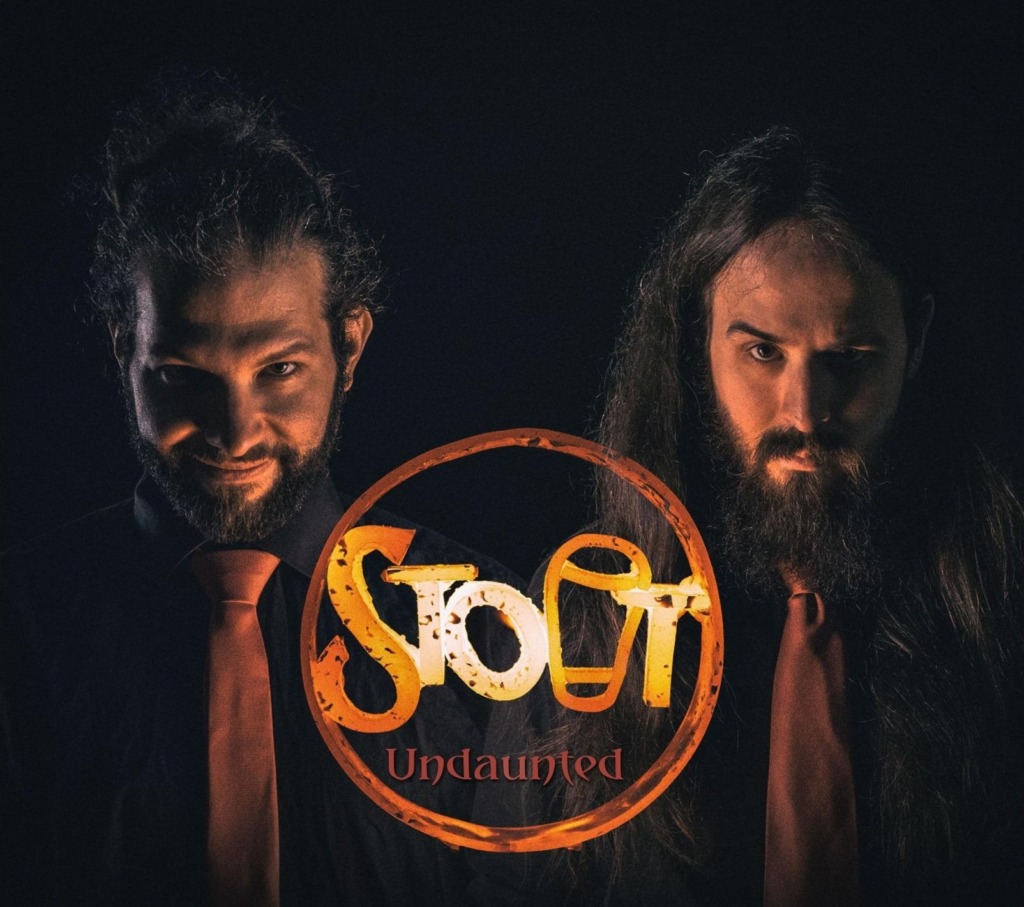
      Cover of the album "Undaunted" by STOUT
      Cover of the album “Undaunted” by STOUT on Amazon.de

      When listening to the album, it quickly becomes apparent that the mix of reinterpreted songs and original tracks is well-balanced. From the very beginning, familiar songs like “Whiskey in the Jar” sound familiar. This helps you, the listener, place STOUT’s songs in context. On “Undaunted,” “well-known” and “familiar” certainly do not mean “old,” “clichéd,” or “boring.” It’s not really accurate to call this a reinterpretation. What the two musicians present uses familiar building blocks to create something new and fresh. This music remains firmly rooted in the Irish folk tradition. Songs like “Fiddler’s Green,” which were formative for the genre, no longer sound nostalgic. The songs on the album “Undaunted” come across as fresh and well-crafted. Such a feat is possible when the musicians have a deep understanding of this music. STOUT’s album clearly embodies both qualities. Although it is only the second album by the band, which was founded in 2013, Folk.World attests to the impressive maturity of “Undaunted.” This maturity is evident in every song.

      Virtuoso ensemble playing and audible harmony

      With a duo like STOUT, there are no compromises. The first time I listened to “Undaunted,” it was clear that none were needed. The talent of these two virtuosos, with their impressive vocal range, really shines through. It takes courage to reimagine well-known classics from the ground up without letting them lose their soul. It’s even harder to integrate new creations into this framework so that they fit in seamlessly. Colorful, well-thought-out, emotional, and fresh—that’s the impression the album leaves after listening. The duo seems to have grown closer since their formation. Especially in the original compositions, there’s a sense of continuity that’s slowly becoming a hallmark of STOUT.

      “Undaunted” combines a spirit of experimentation with a clear goal

      Compared to their first album, “Undaunted” sounds more conceptually driven, and STOUT stand out more clearly as artists. Folk.World is delighted to see that the duo is keeping their spirit of experimentation alive and expanding on it even further. With “Undaunted,” it’s the result that counts—and it sounds really good. You’ll be amazed to discover that the conventional path isn’t the only way to reach your desired goal. “Undaunted” clearly breaks new ground. Things don’t have to be forcibly changed or reinterpreted. When classics are interpreted beautifully, melodically, and with musical understanding—as is the case with this album—an entire music scene can benefit from it.

      Experience STOUT live

      With up to 35 concerts a year, STOUT has a busy schedule. On stage, you can marvel at the vocal talent of these two musicians up close. And the show is certainly not to be missed. The emotional depth of some of the songs from “Undaunted” comes across best in a live setting. The band skillfully draws the audience into their performance. Have they succeeded in breathing new life into Irish folk? From Folk.World’s perspective, there’s no need for a spring cleaning, because tradition is constantly evolving. But STOUT leaves nostalgia behind and brings a breath of fresh air and fire to the genre. It remains exciting, and you can certainly continue to look forward to exciting news from the band.