Posted on — Leave a comment

“Circle Divine” by ZiRP: A Unique Hurdy-Gurdy Sound

On October 23, 2020, the German folk band ZiRP released their second studio album. This new masterpiece is titled “Circle Divine,” and I’d like to take a closer look at it here in Folk Review.

What makes ZiRP special is their use of the hurdy-gurdy, which gives the band’s music an unusual touch.

That’s what defines the ZiRP sound

It’s been a full eight years since the Dresden-based band ZiRP released their debut album. The quartet is known for its unconventional sounds: On their second album, “Circle Divine,” the guys once again prove that innovative approaches are their thing. The key ingredient in this musical folk medley is the hurdy-gurdy, which frontman Stephan Groth alters with various sound effects. “Hurdy Gurdy”—that’s the English term for the instrument, from which the term “Hurdy Gurdy Fusion Folk” is derived. The band uses this name to describe their music, which incorporates elements of jazz, progressive rock, and disco alongside folk-inspired sounds.

Album "Circle Divine" by ZIRP
ZIRP’s album “Circle Divine” on Amazon

Folk Review: Who’s behind ZiRP?

The band consists of four adventurous and lively guys: Stephan Groth, Florian Kolditz, Florian M. Fügemann, and Olaf Peters. The quartet was founded in 2007. Frontman Stephan has also been playing the hurdy-gurdy with the German pagan folk band “Faun” since 2009. When he placed an ad in the local student newspaper, Groth wanted to test the limits of hurdy-gurdy playing. Olaf Peters saw the ad and got in touch with Stephan; later, the rest of the band joined them.

All About the Hurdy-Gurdy

The sounds of the hurdy-gurdy are the first thing you notice when listening to “Circle Divine.” In addition to the Hurdy-gurdy The album features open-tuned (DADGAD) acoustic guitars, bass guitars, and percussion instruments. The densely woven soundscape on “Circle Divine” is rich and surprisingly multifaceted: with their unique sound, the quartet proves that traditional folk instruments aren’t limited to medieval or market music. ZiRP’s new album features original instrumental compositions. At times, the tracks sound like typical folk songs, but overall, the band draws on many different musical styles, from disco to rock. The focus, of course, is on the hurdy-gurdy, which gives the band its distinctive sound.

Long songs and experimental sounds

Compared to their debut album “Drehvolution,” the quartet really lets loose on “Circle Divine.” The tracks average about five minutes in length and are characterized by their unconventional structure. On tracks like “Uhrovec” or “Odd Bourrée,” for example, breaks occur quite suddenly. While listening, these parts made me prick up my ears. Yet a common thread runs through every composition: the hurdy-gurdy melody is often expanded upon and varied during repetitions, which lends depth to the individual tracks. For their debut album, the band was still a trio in the studio.

Great melodies with a special touch

All in all, I have to admit that the album is quite a success. This is primarily due to the rich variety of sounds the guys coax from their instruments on “Circle Divine.” When you’re listening, you never know what’s coming next—and that’s exactly what makes “Circle Divine” so exciting. It’s also great that there’s something for every listener on this album: As a die-hard folk fan, you’ll definitely enjoy tracks like “Kaleidoskop” or “Low Lights.” “Odd Bourrée” and “Zirpelloise,” on the other hand, have a harder and faster edge, which should definitely appeal to rock fans. Personally, I’m particularly taken with the title track, “Circle Divine.” The song is wonderfully atmospheric and even a little bit elegiac. “Mosaic” and “Uhrovec” are also among my favorites: Both tracks feature a melancholic melody, though “Uhrovec” transitions into an up-tempo dance song.

“Circle Divine” is an ambitious and well-crafted album. It shows the listener—both visually and aurally—how traditional instruments can be used in a modern way. As part of the Folk Review, I can highly recommend ZiRP’s new album—especially on a cold fall day with a cup of hot cocoa in hand.


Further contributions:
    Posted on — Leave a comment

    “Life on a Ferris Wheel” by The Feelgood McLouds rocks!

    Imagine entering a run-down music bar. There is a big crowd. It’s incredibly loud. The floor is sticky with spilled liquid. Waiters are balancing trays through the crowd. Beer sloshes in the glasses on the tables. There is a band on the small stage with too many people playing for there to be enough room for everyone. The bass player hits the singer in the head with the mechanics. The banjo player knocks over the drummer’s cymbal stand. The atmosphere is exuberant. Suddenly the whole room is screaming. What’s happened? Everything’s fine – they’re just singing. That’s the chorus.

    This is what it would normally have looked like when The Feelgood McLouds release their new album “Life on a Ferris Wheel” on May 8th on Wolverine Records. For now, the virus is throwing a spanner in the works. The poorly rinsed glasses of this music pub would be a serious danger. Fortunately, we are allowed to pop a silver disk into the CD player. There’s a cold beer in the fridge. And off we go with the album review.

    Six New Dubliners

    The Feelgood McLouds play Celtic punk. The six Saarlanders describe themselves as a younger version of the Dubliners, if they were influenced by punk. However, the musicians insist that they are more hard-drinking than the Dubliners. After their debut in 2017, “Life on a Ferris Wheel” is the band’s second album.

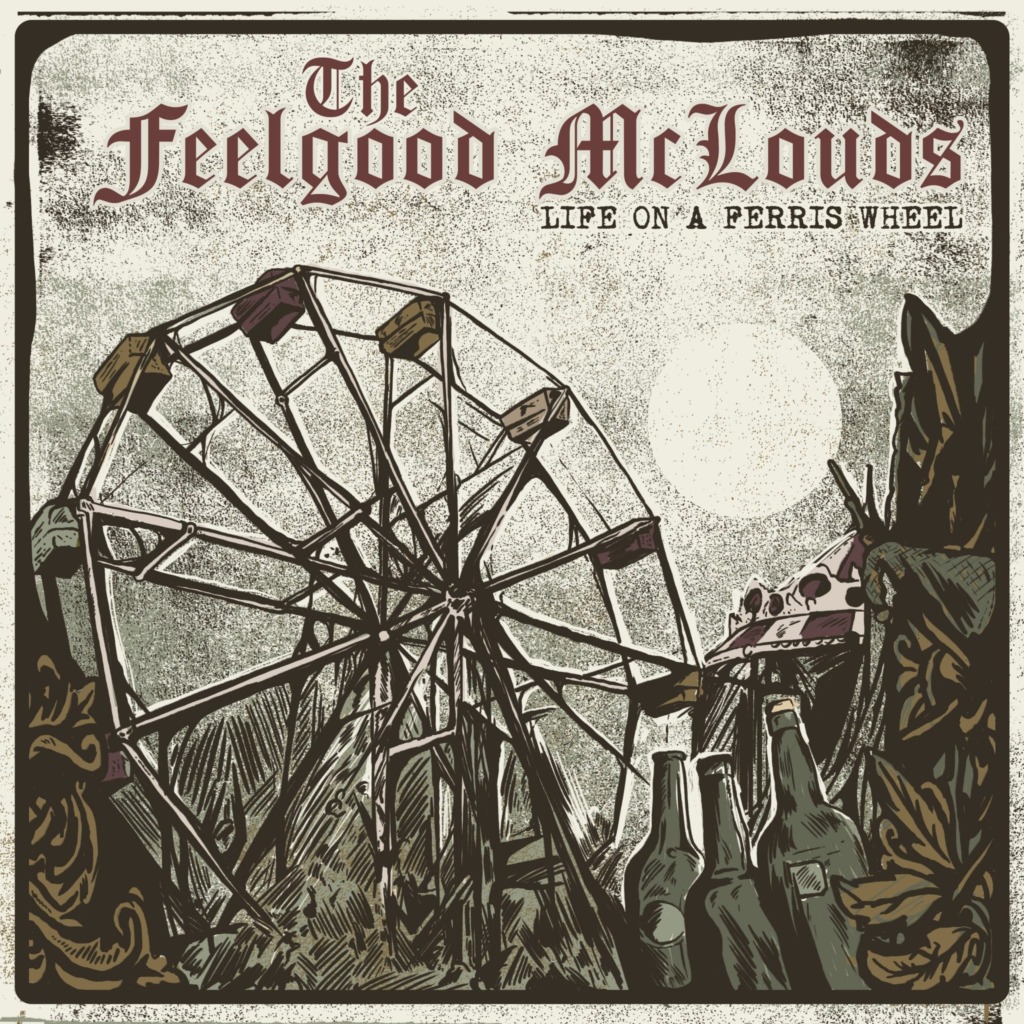
    Album "Life on a Ferris Wheel" by The Feelgood McLouds
    Album “Life on a Ferris Wheel” by The Feelgood McLouds on Amazon.de

    In addition to guitar, bass and drums, banjo, accordion, tin whistle and bagpipes can often be heard. Banjo and accordion were not on the first album. On “Life on a Ferris Wheel”, everything also sounds a little more sophisticated and mature. The range of influences has increased. For example, “Lovers and Friends” is a ska number for long stretches. In “Off the Rails” you can hear a banjo playing a bluegrass theme. With “In our Pup”, there is even an almost quiet song on this album.

    The Feelgood McLouds have expanded their possibilities. They are starting to play with the genre. As a Celtic punk fan, you can still remain relaxed. The energy of punk can always be felt and themes from Celtic folklore are constantly cropping up. There is also a roaring male choir in every song! When listening to “Life on a Ferris Wheel”, you’re bound to think of The Pogues more than once. The Feelgood McLouds have to be measured against the forefathers of the genre. The band’s lyrics are mostly about partying and drinking. Sometimes the musicians also address more serious topics. In “Spineless Mass” they even call for a riot.

    Celtic Saarlanders

    When musicians play a genre that is associated with a specific place or landscape, the question arises as to where these musicians come from. Can someone who grew up in the Saarland deal with the traditions of Irish and Scottish folklore?

    The question of authenticity is justified, but it seems a little academic to me. We wouldn’t reject a country singer from New York because he wasn’t born in the Appalachians. We wouldn’t deny a Japanese violinist a feeling for Viennese classical music.

    First and foremost, I can hear the joy of music in The Feelgood McLouds. What the musicians deliver on “Life on a Ferris Wheel” is genuine. They write their songs themselves. They hammer away on their instruments. They sweat. They grin. I wouldn’t mind if alphorns were used on the next album. Maybe a mariachi trumpet would be even better. The band could do something really crazy and sing a song in a Saarland dialect.

    Back on stage

    The concert in the run-down music pub described at the beginning will not take place for the time being. But you will have a lot of fun when “Life on a Ferris Wheel” booms out of your speakers. And watch the video for the song “Moonshiners” right after reading the album review. The Feelgood McLouds will return to the stage. The band’s music belongs on stage. Everyone sings along! Then there’s another beer.


    Further reviews:

      Posted on — Leave a comment

      “Duo” – Diverse folk music from the Netherlands

      For the first time in their thirty-year performing career, the two Dutch musicians Jenny van Diggelen and Guy Roelofs have produced their own album, titled “Duo.” In this article, we’d like to introduce you to these two virtuosos and share some fascinating information about them. In our Folk Review, you’ll get a first look at the details of the album.

      First Duo Album

      We took the occasion of the nearly one-year anniversary of the CD “Duo” by Jenny van Diggelen and Guy Roelofs to write a music review. The album was released on April 15, 2019. It is the first duo album by flutist van Diggelen and guitarist and keyboardist Guy Roelofs. I’d like to reveal right away that this CD is very diverse and, through a multi-layered recording technique, explores all the possibilities of a duo. The joy and sensitivity of both musicians toward folk music are audible in every track.

      The album “Duo” is a hidden gem of folk music.

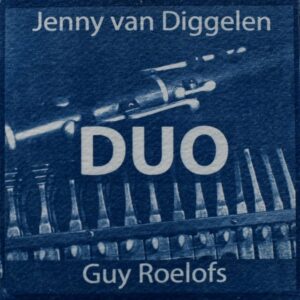
      Cover of the album "Duo" by Jenny van Diggelen and Guy Roelofs
      The album “Duo” on Amazon.de

      The two musicians, van Diggelen and Roelofs—who are also a couple in real life—met thirty years ago while playing music together and regularly perform in the band Tjane, which specializes in Dutch folk music. Driven by an interest in the music of other countries and regions, they spent several years creating the album “Duo,” which we’d like to recommend to you as a hidden gem in the folk genre. Both musicians play multiple instruments on this CD: van Diggelen on the transverse flute, recorder, and tin whistle, while Guy Roelofs plays the nyckelharpa, bouzouki, guitar, and keyboard.

      “Duo” brings together tunes from various countries

      As the flutist for the band Tjane, van Diggelen recorded five CDs. She collaborated with the band Moira on an album of Irish folk tunes. She has also participated in numerous productions with other musicians and her partner Roelofs. The album “Duo” is her first CD. The two passionate musicians produced it entirely on their own in their own studio, Fuaime. It also features Jenny van Diggelen’s first recordings of Swedish and Bulgarian folk tunes.

      Sonic variety achieved through multi-layered recording techniques

      The album “Duo” consists of nine traditional tunes and five original compositions by Guy Roelofs, offering a variety of sounds. At the same time, however, they blend organically into the overall concept of the CD. Thanks to a multi-layered recording process, in which both musicians were recorded simultaneously over one another and using different instruments, the result is usually not just a duo, but a quartet or quintet. For example, on the second track, “Farmödrar polska,” Guy Roelofs plays the keyboard, bouzouki, and nyckelharpa simultaneously alongside van Diggelen on the flute, with precise interplay and pure intonation. The rare instrument, the nyckelharpa, is a fiddle whose strings are mechanically shortened via keys, producing a sonorous and pleasant timbre.

      Two guest musicians and a great atmosphere

      Keyboardist Guy Roelofs makes effective use of his instrument’s timbres on select tracks. The rhythmically lively track “Polska fran Hälleforsnäs” creates an exciting sound with its interesting percussion effects. The atmospheric crossover ballad “Gaoth Barra” uses distorted string sounds to create a wonderful emotional arc throughout the entire song. The two guest musicians, Jiroh Matulessy on rhythm bass guitar and Arjan van Tricht on the soft, bell-like Fender Rhodes piano, blend perfectly into the album’s sonic concept on “Barloo.” I particularly enjoyed the penultimate track, “Scottis fran Harjedalen.” Both musicians play with perfect intonation and rhythmic precision while spreading pure joy. That’s what folk music should be like!

      The Album as a Total Work of Art

      Jenny van Diggelen told us that the blend of music from different countries and regions inspired her and her partner to create both traditional and modern interpretations. She also views this CD as a total work of art combining music and visual art. Van Diggelen works as a graphic designer and specializes in cyanotype. Using this technique, she creates every single physical CD herself, thereby presenting the listener with an album that is handmade in every sense of the word.

      Jenny van Diggelen live

      Due to the recording process, this CD is a studio album and cannot be reproduced live in this form. Jenny van Diggelen regularly performs as a trio with Guy Roelofs. The sound differs from that of the album “Duo.” If you’d like to hear both musicians perform live, be sure to follow the band’s website, www.tjane.nl. Concert dates are posted there regularly.