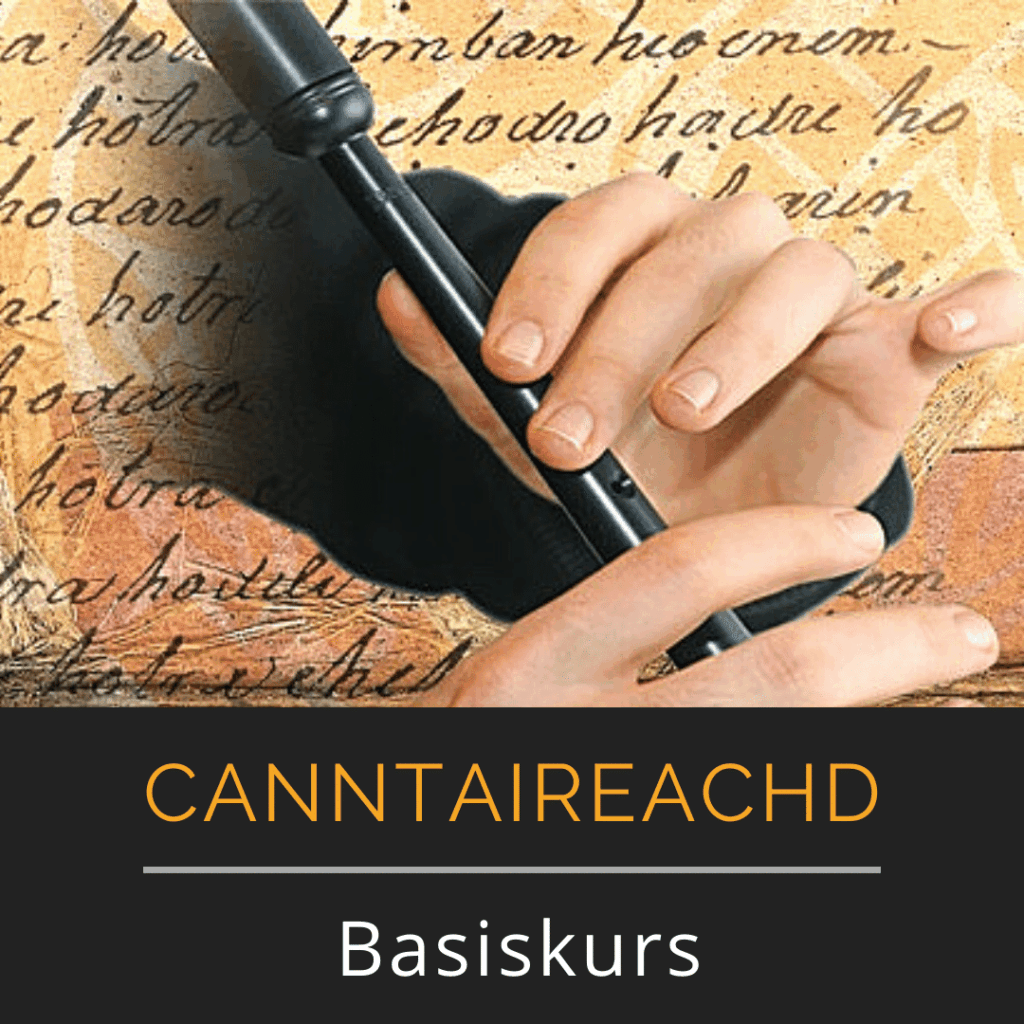
The Bagpipe Academy offers a high-quality course called “Music Theory for Bagpipers (Basic Course).” This course is a great way to learn the basics of music theory in the context of bagpipe playing.
Whether you play the Great Highland Bagpipe, Borderpipe, Scottish Smallpipe, the medieval market bag, Hümmelchen or shepherd’s pipe – this basic course is for you, even if you have no previous experience.
In this course you can expect the following topics:
WELCOME! – You’ll begin your musical journey with a warm introduction.
Course Information – You will receive important information that will help you get the most out of the course.
A First Quiz – Just for Fun! – A fun quiz to kick off your music theory journey in a playful way.
As the course progresses, you’ll learn the essential music theory you need as a bagpipe player, understand scale structures, and become familiar with different types of bagpipes. The course provides study materials and quizzes to help you deepen your knowledge.
This beginner’s course is a great opportunity to improve your bagpipe-playing skills and develop a better understanding of music theory. You can book the course directly.
Improve your bagpipe playing with the Bagpipe Academy ONLINE—professional expertise on various bagpipe traditions, learning anytime and anywhere, top-notch instruction, and great courses to choose from. Sign up now and dive into the world of bagpipe music!
Content
Welcome to the Bagpipe Academy ONLINE
Welcome to the Dudelsack Academy’s online course offerings! The Dudelsack Academy ONLINE offers professional courses on the most important topics in bagpipe playing for various bagpipe traditions, such as the Scottish Great Highland Bagpipe, the medieval bagpipe, and the shepherd’s pipe. The courses are suitable for both beginners and advanced players.
Bagpipe Academy ONLINE
Improve Your Bagpipe Playing
With the Dudelsack Academy’s online program, you can decide when and where you want to work through the videos and study materials. The program is available day and night—you can get started anytime.
The online courses offered by the Dudelsack-Akademie ONLINE are designed to deepen your understanding of the bagpipe tradition and inspire you. With these online courses, you can improve your own bagpipe playing and focus on the music that is close to your heart.
Unparalleled Expertise
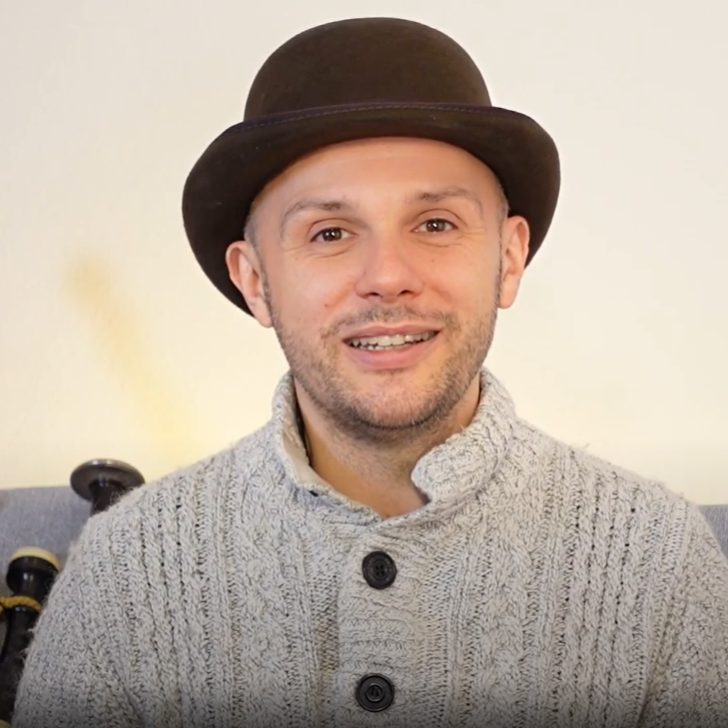
Your instructor at the Bagpipe Academy, Thomas Zöller, is an experienced bagpiper who enjoys sharing his passion for “Canntaireachd,” the traditional language of teaching and learning among bagpipers, with his students. With his knowledge and enthusiasm, he aims to help students delve deeper into the subject and develop their own passion for bagpipe music. During his studies of Scottish music and the Great Highland Bagpipe at the National Piping Centre and the Royal Scottish Academy of Music and Drama (2002–2005), he gained in-depth knowledge and insights into the subject. He also had the opportunity to learn from and be inspired by teachers such as Allan MacDonald of Glenuig and Barnaby Brown.
Thomas Zöller during one of his online courses
Fantastic Courses Available
The Bagpipe Academy offers several online courses that cover various aspects of bagpipe playing. These include courses on “Canntaireachd,” the traditional language of teaching and learning used by bagpipers; on the phrasing of bagpipe pieces and understanding “beat position”; and on music theory for bagpipers. The courses are led by experienced bagpipers and are suitable for both beginners and advanced players. They include learning materials such as quizzes, worksheets, and sheet music, as well as the option to play videos at different speeds. Some courses also offer insights into the favorite pieces of successful bagpipers and their interpretations and techniques.
The Bagpipe Academy offers an online course that focuses on the traditional language of teaching and learning used by bagpipers, “Canntaireachd“, the course focuses on. The instructor, Thomas Zöller, is an experienced bagpiper who enjoys sharing his passion for Canntaireachd with his students. The course is suitable for beginners and includes a basic introduction to the Canntaireachd, background information on the Campbell Canntaireachd, learning Canntaireachd syllables, and understanding the structure of the Campbell Canntaireachd. It also includes quizzes, worksheets, and a transcription of the featured piece. The course is primarily intended for players of Scottish bagpipes such as the Great Highland Bagpipe, Borderpipe, or Scottish Smallpipe, but is also suitable for those interested in Europe’s most ancient and unbroken musical traditions.
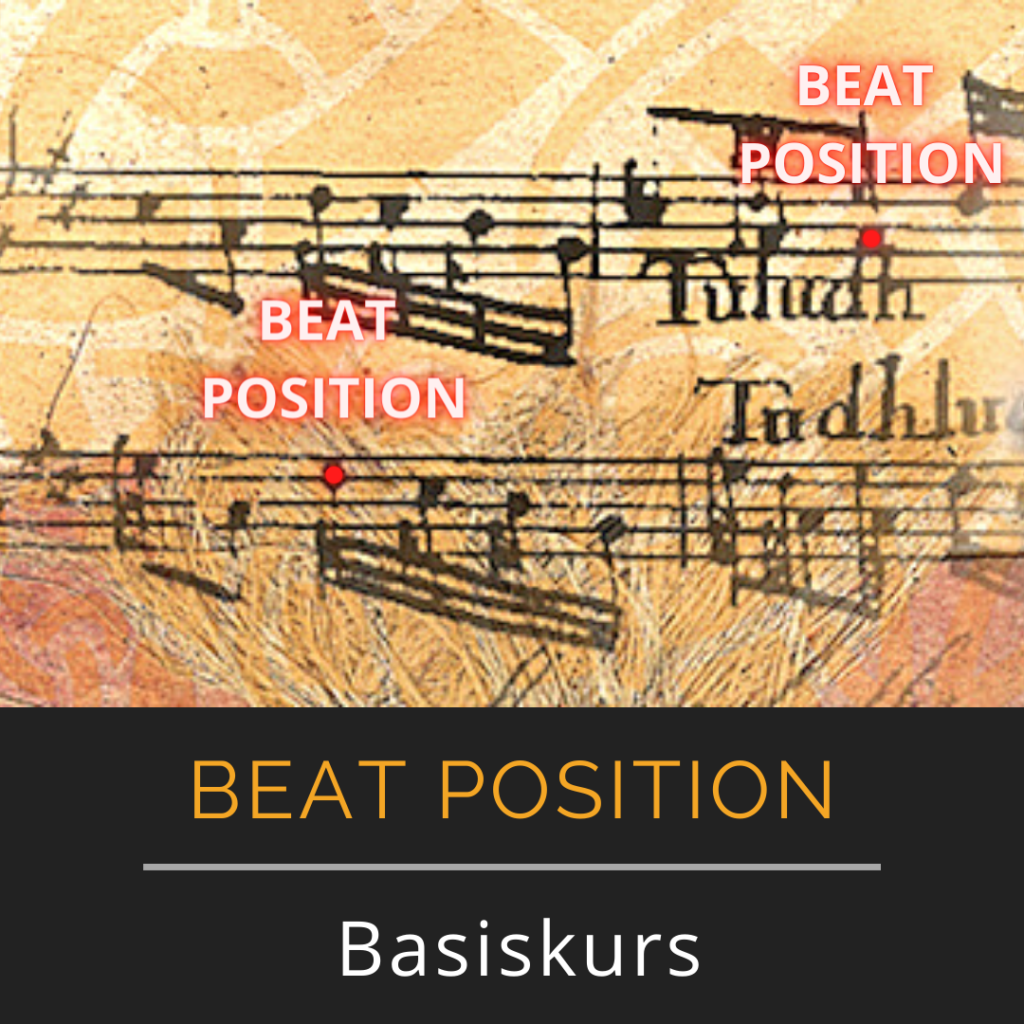
The Dudelsack Academy’s online course“Beat Position,” led by Thomas Zöller, focuses on the phrasing of bagpipe pieces and understanding “beat position” as a key factor in expressive playing. The course includes exercises and examples of how to apply “Beat Position” in various embellishments and motifs, as well as quizzes and worksheets to support learning. It is particularly suitable for Scottish bagpipe players and anyone interested in Scottish embellishment techniques.
The course“Music Theory for Bagpipers” teaches fundamental music theory and an understanding of the tonal space, the aspects of the notation system relevant to bagpipers, the construction of scales and accidentals, transposition signs, and resolution signs, as well as a basic understanding of just intonation and equal temperament. The course is suitable for bagpipers of all skill levels and includes step-by-step assessments of learning progress through quizzes and worksheets in PDF format.
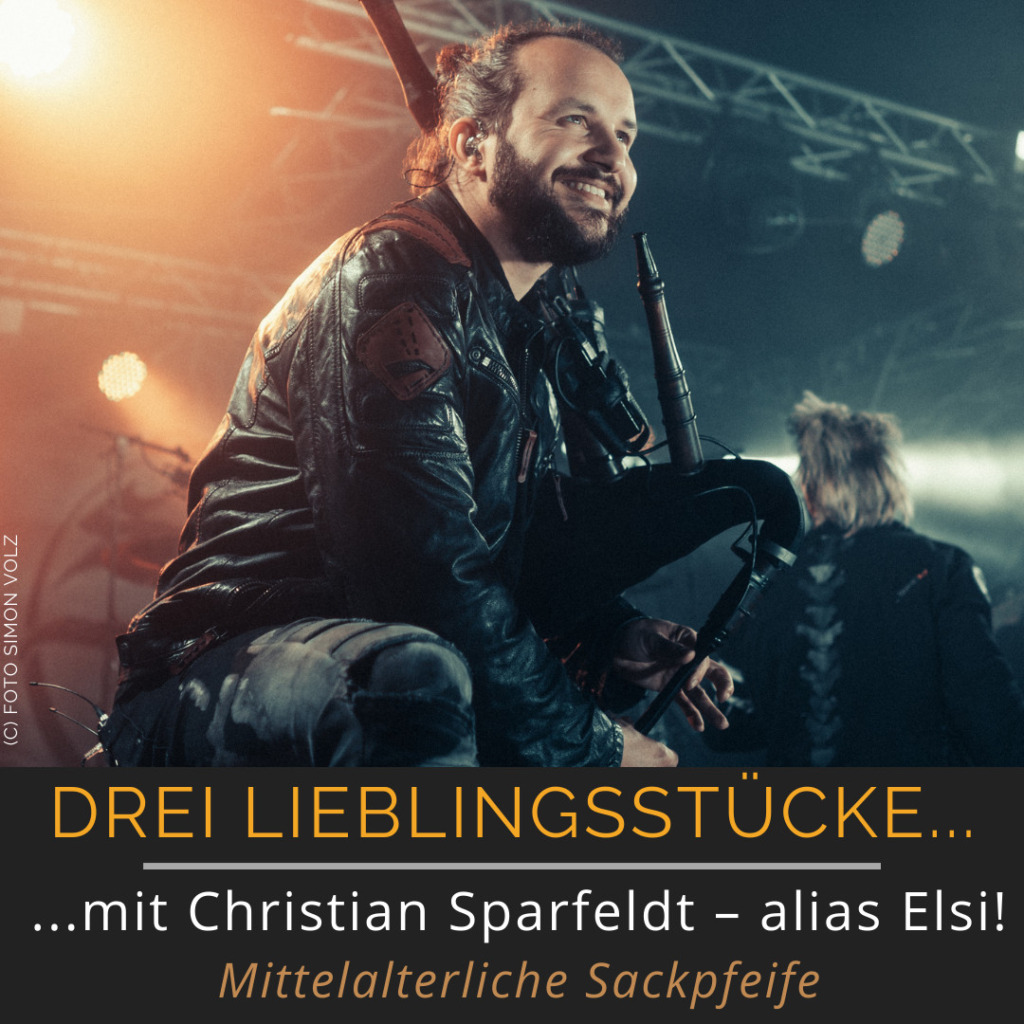
THREE FAVORITE SONGS WITH… ELSI (by Saltatio Mortis)
This course is led by Christian (aka Elsi) from the band Saltatio Mortis, who teaches his three favorite pieces (“Welscher Weibertanz,” “Amo lem ad Nauseam,” and “Je Vivroie Liement”) and offers insights into his interpretation and ornamentation techniques. There is also a conversation between Christian and Thomas in which they explore the background of the pieces. The course includes approximately 85 minutes of video material, tips and tricks for improving your bagpipe playing, the option to play the videos at different speeds, and sheet music for the three favorite pieces in PDF format. The pieces are graded by difficulty and are suitable for advanced players.
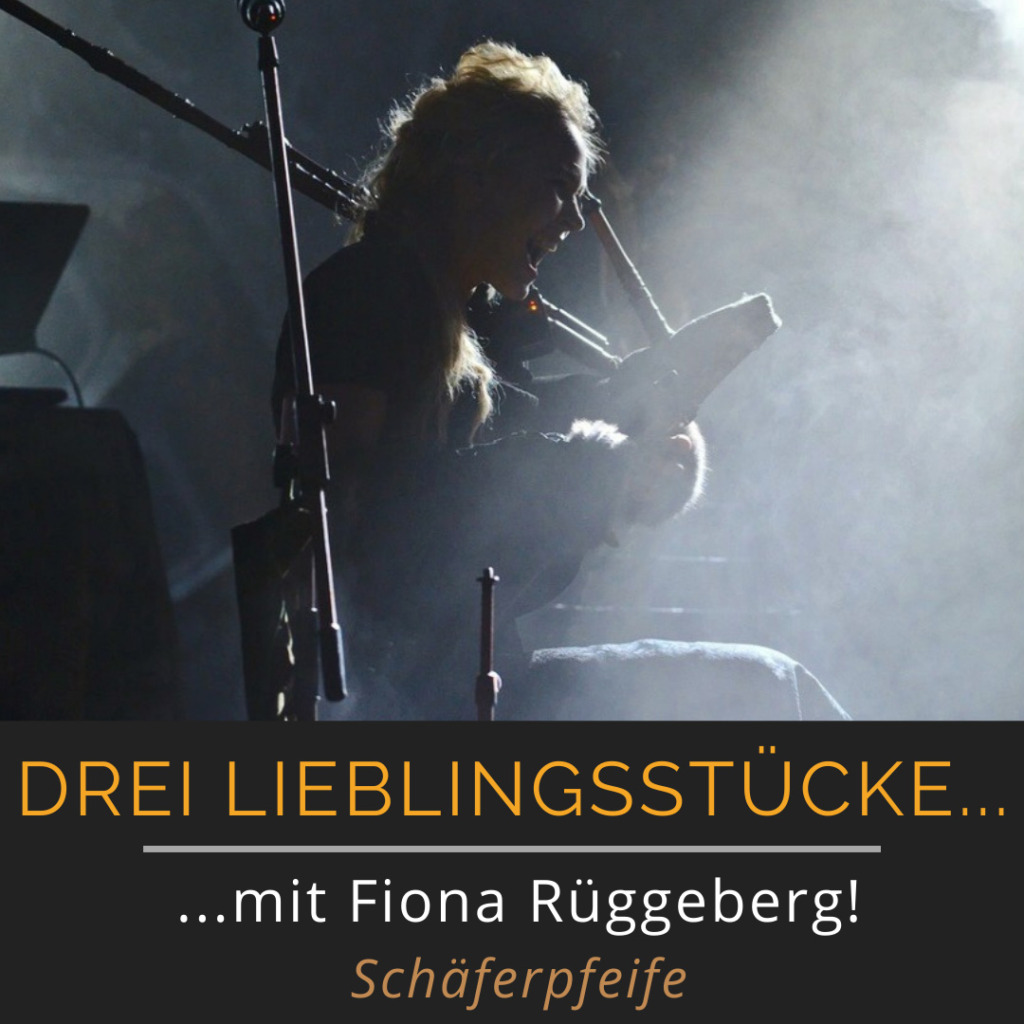
THREE FAVORITE SONGS WITH… FIONA (formerly of Faun)
This course includes Three of Fiona’s Favorite Pieces (An Dro, Rhiannon & Sandpipers) by the band TVINNA and formerly of Faun. Fiona teaches a basic version of the pieces and then demonstrates her fully developed versions. There is also a conversation between Thomas and Fiona in which they shed light on the background of the pieces. The course includes approximately 150 minutes of video footage, detailed tips and tricks for expanding your expressive range on the bagpipes, the option to play the videos at different speeds, and sheet music for the three favorite pieces in PDF format. The pieces are graded by difficulty and are suitable for advanced beginners (An Dro) and for intermediate players with experience (Rhiannon, Sandpipers).
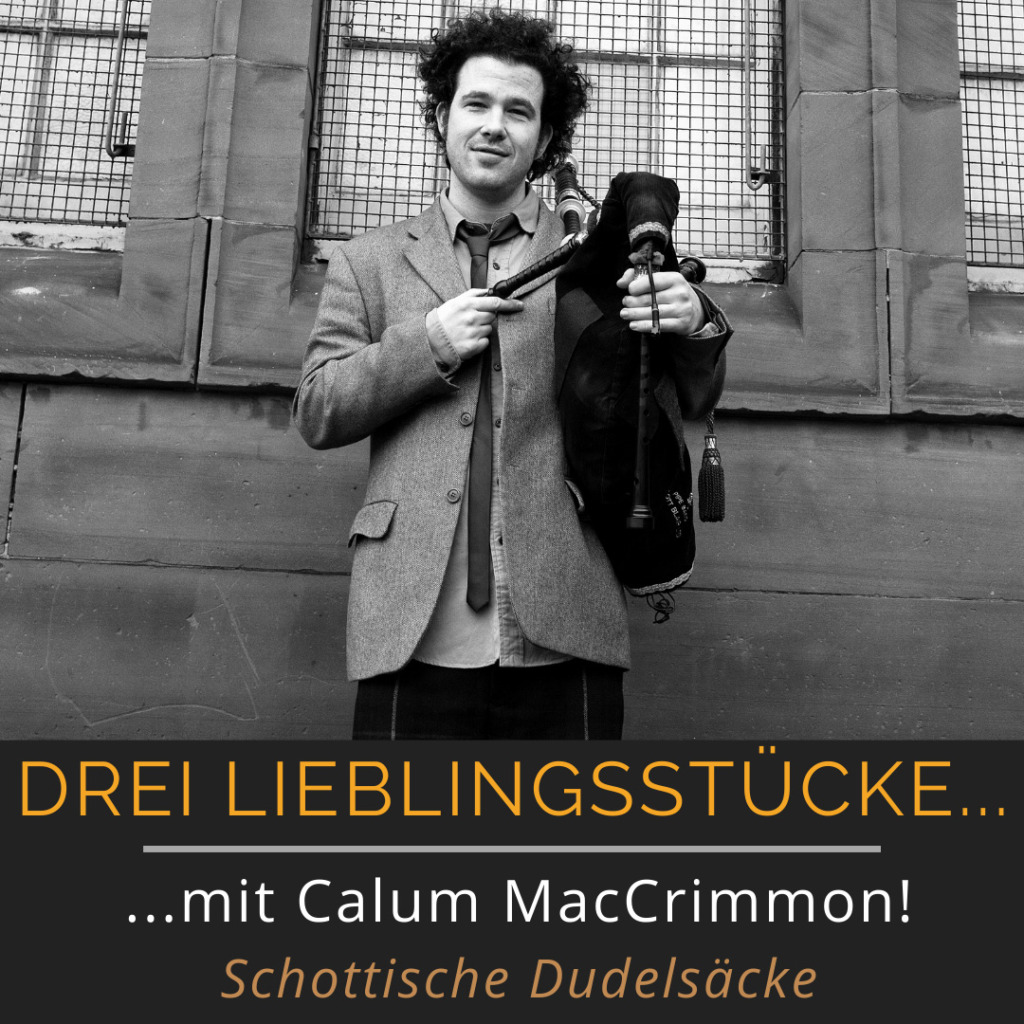
THREE FAVORITE SONGS WITH… CALUM MACCRIMMON (Breabach)
This course from the Dudelsack Academy ONLINE features three of Calum’s favorite pieces, namely “Maol Donn” (pibroch ground), “Lord Lovat’s” (strathspey), and “The White Houses of Shieldaig” (reel) by the band Breabach. Calum explains the key aspects of the pieces and provides insights into their respective genres and origins. The course also features Calum’s own Canntaireachd style and an in-depth conversation between Thomas and Calum, in which they explore the pieces and their backgrounds. The course features approximately 75 minutes of video content, is in English with German subtitles, and offers tips and tricks for adapting the pieces to other instruments. The option to play the videos at different speeds and sheet music for the three favorite pieces as PDFs in two formats (Scottish and standard notation) are also included.
Get Started Now
Don’t wait any longer—get started now with the online courses at the Bagpipe Academy. Improve your bagpipe playing and let tradition inspire you. With our online courses, you can get started anytime, anywhere. The Bagpipe Academy looks forward to having you join us!
Come experience the magic of traditional music and dance at the 2023 Odenwald Dance and Instrumental Course! With only a few spots left, this event offers a varied program centered on making… Read more: Odenwald Dance and Instrument Course 2023
Yangens’ “Majoljóð EP” is a moving musical journey set for release on July 15, 2023. This EP is a tribute to Mario Korneck, a musician in the medieval music scene and longtime… Read more: Review of the EP “Majoljóð” by Yangens
At the KlangRauschTreffen, meet hurdy-gurdy, bagpipe, and nyckelharpa players, as well as many other like-minded people, and celebrate three days filled with music, dance, and joy. Enjoy concerts, workshops, and the folk song contest, and visit the instrument makers. Register now and join the fun!
Matthias Branschke is an instrument maker from Berlin. His range includes bagpipes based on French and Swedish models. Matthias is also a professional musician and lecturer at bagpipe workshops.
In his guest article for Folk.World, Matthias gives valuable tips for bagpipe beginners and aspiring bagpipe players.
Matthias Branschke, what is your motivation as an instrument maker?
I started playing the bagpipes at the end of the 90s at the age of 12. Due to the folk revival in the 1970s, the bagpipe repertoire at that time was mainly French-inspired. I was lucky enough to have lessons with Ralf Gehler, who was one of the first bagpipers in Germany to explore our German tradition. He awakened in me the desire to rediscover this tradition and to allow my own creativity to flow into it. To this day, I mainly play new melodies by colleagues and myself, as well as traditional repertoire from the German-speaking world.
And I became a bagpipe maker because I still see a lot of potential in the bagpipes, which you first have to tease out of them.
Which bagpipes do you make?
I make two different types of bagpipes.
On the one hand, there are instruments with conically drilled chanter pipes and semi-closed fingering. These have a fairly wide range for a bagpipe, namely one and a half octaves, and are almost fully chromatic. I make these instruments in three different designs, namely
as a school instrument where the instrument is reduced to the essentials (a drone, blowpipe, chanter, bag and that’s it)
as a shepherd’s pipe, a historical design from the German-speaking world
and as a three-board instrument in which I install all the extras that seem useful to me as a musician on stage. The model runs under the name “Sessionprotz”.
I also make Swedish Säckpipor (plural of “Säckpipa”), an instrument with a cylindrical chanter bore and a reed in the chanter. You can “only” play one octave on it, but I find the Säckpipa particularly suitable for traditional playing.
How do I become a bagpiper?
If someone wants to get into the world of bagpipes, I recommend one thing above all: talking to people who already play. Course weekends are a good opportunity to do this, and there are a lot of them regularly throughout Germany. The world of bagpipes is incredibly diverse.
So if you still have no idea which of the 180 different types (!) of bagpipes you would like to play, I recommend that you attend a beginners’ course. In my opinion, the most flexible instruments for beginners are chanter pipes with semi-closed “French” fingering. Starting with such an instrument opens doors. You can always change over when you know exactly where you want to go.
If you want to play the bagpipes, you need one thing above all: patience. In principle, playing the bagpipes requires the same skills as any other instrument. You have to practise, and every now and then someone should check to make sure you’re not making mistakes.
Unfortunately, the density of bagpipe teachers is nowhere near as good as for classical instruments. However, there are quite a few courses, and lessons via Skype are now also a good alternative. Then it’s just a case of practicing, practicing, practicing.
Don’t get frustrated, no master has fallen from the sky yet, and with 20 minutes of practice a day you’ll make quick progress.
How much does it cost to play the bagpipes?
I think anything under 500 euros for a new instrument is probably a waste of money. There are some manufacturers who offer instruments in this price segment, but most of them are “Made in Pakistan” (no joke) and simply don’t work. It really starts at 1000 euros, but of course there is always room for improvement. It is best to get advice from an instrument maker or someone who has been playing bagpipes for a long time.
What you should spend on lessons and courses depends on how much input you need. If you have the chance to visit a teacher from your region, you should take the opportunity. It usually starts at around 30 euros per hour. Courses – which should not be underestimated as a social event – usually cost upwards of 150 euros for a weekend.
Which textbook would you recommend?
There are only a few textbooks for the bagpipes on the market. Technically good, although actually designed for a French style of playing and therefore highly recommended, is “Dudelsack spielen” by Bernard Boulanger. If you want to broaden your technical knowledge a little, you can find some books for Scottish bagpipes and other “insular” bagpipe types in the English-speaking world, but apart from Boulanger’s book, there are no other textbooks for the bagpipe types that I play.
Do the bagpipes come from traditional music?
The bagpipes were the instrument of traditional music in almost all of Europe until the 18th century. The disco music of the time was played on them, so to speak. Of course, people have always wanted to dance, and a bagpipe can play well acoustically on its own, so you can keep the costs down at a dance evening, only need one musician and the party can start. The bagpipes are therefore inextricably linked with traditional music.
Is there sheet music for traditional bagpipe music?
All the sources of traditional music have been written down by fiddlers. Therefore, the pieces often do not fit directly on the bagpipes. With a bit of skill, many tunes can be adapted. If you want to embark on the journey, I can definitely recommend a bit of music theory. A group of people with whom I am quite good friends have studied the subject intensively. If you want to take a look: Dance music archive
What would you like to pass on to us?
Go for it! If you’re interested in the bagpipes, you should give them a try and check out the instrument at . The world of the bagpipes is incredibly fascinating and diverse, so it’s definitely worth a musical journey .