Posted on — Leave a comment

Odenwald Dance and Instrument Course 2023

Come experience the magic of traditional music and dance at the 2023 Odenwald Dance and Instrumental Course! With only a few spots left, this event offers a varied program centered on making music, dancing, and good conversation.

We hope you’re just as excited as we are about our 2023 course! Registration is already in full swing, and there are only a few spots left. That’s really great, because it shows that interest in traditional music and dance remains as strong as ever.

In the course overview, you’ll already find some exciting details about this year’s program. The organizers have gone all out to offer you a diverse and inspiring experience. From Thursday, November 2, through Sunday, November 5, 2023, the Evangelical Youth conference center in 74865 Neckarzimmern will once again serve as the venue for our musical and dance journey.

Our event is all about music and dance. You can look forward to a colorful mix of intensive workshops, making music and dancing together, as well as plenty of time for good conversations and simply enjoying music in general. Whether you’re an experienced musician or just starting out, there’s something for everyone here. We warmly invite you to be part of this special event.

Our instructors are highly qualified and experienced musicians who will guide you in various ensembles and instrumental classes. Let me give you a brief overview of the different groups.

The courses

“The North Sea Sessions” ensemble course with Keith Macdonald: In this course, we’ll explore an interesting selection of tunes from the countries surrounding the North Sea. No matter what instrument you play, Keith Macdonald will take you on a journey into the world of traditional music.

Swedish Folk! with Anders and Maria Larsson: Look forward to traditional Swedish music, polkas, cheerful dance tunes, and love songs. This workshop is suitable for a wide variety of instruments, including vocals.

Sound of the Mediterranean—Sounds of the South with Christoph Pelgen: Immerse yourself in the music of the South, from tavern blues and rembetiko to Turkish sounds. This ensemble course is suitable for various instruments and singers.


Byrd’s Songs and Dances with Ian Harrison: In this course, we explore English ballads and dance tunes from the Renaissance period. Various instruments are welcome, and singing is also part of the course.


Bourrée auvergnate & Co with Daniela Heiderich: This course focuses on the repertoire of the Auvergne and Limousin regions. Bring your bagpipes, hurdy-gurdies, accordions, and violins—we’ll be swaying and dancing!


Intensive recorder training with Susanne “Suzette” Godel: For the recorder lovers among you, there is an intensive training that covers finger technique, beautiful tones and pieces from folk and early music genres.


Dance Music on the Harp with Corinna Darsch: This course is designed for harpists who want to explore the world of dance. You’ll follow chord symbols and play danceable pieces.


The conference center of the Evangelical Youth in 74865 Neckarzimmern offers the ideal environment for our event, with enough space for workshops and of course our famous Saturday night party with flea market and exhibition.

You can register via the link on the website. For anyone who would like to receive further information by email, we recommend signing up for the newsletter on the homepage.

We are looking forward to November, to you and to a colorful program with lots of time for making music, dancing, good conversations and enjoying music in general.

More info at: https://www.otik-ev.de/


Further contributions:

Posted on — Leave a comment

Discover dance music: If you want to get to the source, you have to swim against the current

Merit Zloch is an art historian and archaeologist from Berlin. In her guest article, she describes the exciting safari in search of German trad and dance music.

How did this all start with the regional dance music sources? When I began writing this “eyewitness account,” I couldn’t remember when the “Dahlhoff Dance Collection” had been digitized. Was it in 2011 or 2012, when colleagues and friends pooled their money to have the notebooks digitized?

The Dahlhoff Collection

I had to look it up. It was 2012, eight years ago now. It feels longer, though, because a lot has happened since then in terms of “dance music from German sources”. The digitization of the 10 octavo booklets aroused our curiosity for more and got the ball rolling. Music from dance music manuscripts from German-speaking countries is now not only played at sessions, but can also be found on CDs and interests European neighbors near and far.

For the first time since the rediscovery of the Dahlhoff—even before the digitized version was made available online—music is being performed from it. Pipenbock Music Workshop 2012.

But back to what is probably the best-known rediscovered archive – the “Dahlhoff Dance Collection” from the period between 1767 and 1799, written down by a sexton in a village near Bielefeld. The story that preceded the digitization is a little Indiana Jones adventure – not in distant, wild lands, however, but in the internet and library.

The digitization of found objects

While searching for exciting melodies for his band Malbrook, Wolfgang Meyering, a musician[fn]and radio presenter from Emden[/fn], was delighted to come across handwritten dance music with German-language names in the digital collection Svenskt visarkiv. These were transcriptions made by a certain Nils Dencker. This man – a Swedish ethnologist – was apparently on the lookout for Polonese melodies in the 1930s, including in Berlin. He copied Polonese tunes from the “Dahlhoff Dance Collection” and brought them back to Sweden.

Wolfgang Meyering told Simon Wascher, hurdy-gurdy player[fn], dance and music researcher from Vienna, about his find at http://simonwascher.info/[/fn], who was also researching the Polonese at the time. He traveled to Berlin and found the original in the Staatsbibliothek Unter den Linden. As far as the size of the source was concerned, his expectations were along the usual lines: everything between a few loose sheets and an octavo booklet. To his great surprise, however, he was presented with 10 bound booklets. It quickly became clear that it would make a lot of sense to have the booklets digitized. So we joined forces with a total of 13 people and made the digitization possible.

Of companions and dangerous sources

My friends and colleagues had long since developed an interest in music from German sources, and we inspired one another. Dr. Ralf[fn]Gehler, a music ethnologist and musician from Schwerin, http://tradmusikzentrum.de/[/fn] has been interested in dance music manuscripts and the like for decades and continues to unearth amazing discoveries time and again. Vivien[fn]Zeller, a musician from Berlin and co-editor of “Neues aus alten Büchern,” http://www.vivienzeller.de/[/fn], has been interested in German traditional music ever since she started making music. Matthias[fn]Branschke, a musician and instrument maker from Wittenberg, www.dudelsackmanufaktur.de[/fn] As a teenager, he discovered a highly dangerous source in his hometown—a pharmacist’s “poison book,” which had also been used as a music notebook. As an art historian and archaeologist with a particular fondness for sources, I have been fascinated by regionally transmitted music since the early 1990s.

And of course we weren’t the first to take an interest in the subject, to search for, find, play, record and spread this music! To name just two bands each from East and West with founding dates in the 70s: Folkländer, Horch, who inspired me a lot, Elster Silberflug, Zupfgeigenhansel.

In 20xx, Tramudera e.V. acquired a flea market find as part of a fundraising campaign—the violin method book of a certain August Dehmlow from Siedenbollentin (Vorpommern)
In 20xx, Tramudera e.V. acquired a flea market find as part of a fundraising campaign—the violin book of a certain August Dehmlow from Siedenbollentin (Vorpommern). The digitized version can be found here at http://tanzmusikarchiv.de/?page_id=514 (Photo: Merit Zloch)

The proud results of the research

Since 2013, we—primarily Vivien Zeller and Thomas Behr from Berlin—have been publishing a series called “New from old books” to share what we consider to be the greatest hits from these sources with interested musicians. Melodies from these songbooks can now be found not only in our concert and dance programs and on our CDs[fn]”Up blasen de lulleken pipe” (2000) and “Up frien foten” (1992-2002) by Ralf Gehler – “Malbook” (2004) and “Quade Wulf” (2008) by Malbrook – “hardigatti!” (2004) and “spring” (2006) by bilwesz – “urban legends” (2007) by Merit Zloch – “Liebeslieder im Rahmen der Möglichkeiten” (2018) by TradTöchter – “Abfahrt in 5 Minuten” (2019) by Harfenduo Zirla[/fn].

Among others, Faun, Deitsch, Zirp and various projects around Michael MöllersMichael[fn]Möllers is intensively involved in research into the Dahlhoff sexton family and their dance collection. http://dahlhoff-die-band.de/index.php/de/dahlhoff[/fn] have recorded wonderful interpretations of pieces from various music books.

I’d like to present a small, very personal selection of sources here in no particular order. If you’d like to get a sense of what’s out there—and there’s a lot at
!—I recommend starting with an audiovisual look at the YouTube channel“Tradtanzmusik.” I’d also like to recommend the website tanzmusikarchiv.de —and if you’d like to purchase issues of “Neues aus alten Büchern,” you can do so at deutschtradshop.de.


Further contributions:

    Posted on — Leave a comment

    “Duo” – Diverse folk music from the Netherlands

    For the first time in their thirty-year performing career, the two Dutch musicians Jenny van Diggelen and Guy Roelofs have produced their own album, titled “Duo.” In this article, we’d like to introduce you to these two virtuosos and share some fascinating information about them. In our Folk Review, you’ll get a first look at the details of the album.

    First Duo Album

    We took the occasion of the nearly one-year anniversary of the CD “Duo” by Jenny van Diggelen and Guy Roelofs to write a music review. The album was released on April 15, 2019. It is the first duo album by flutist van Diggelen and guitarist and keyboardist Guy Roelofs. I’d like to reveal right away that this CD is very diverse and, through a multi-layered recording technique, explores all the possibilities of a duo. The joy and sensitivity of both musicians toward folk music are audible in every track.

    The album “Duo” is a hidden gem of folk music.

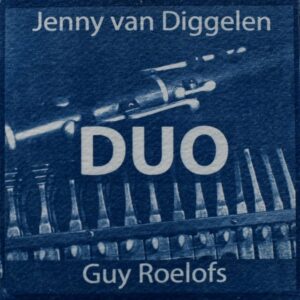
    Cover of the album "Duo" by Jenny van Diggelen and Guy Roelofs
    The album “Duo” on Amazon.de

    The two musicians, van Diggelen and Roelofs—who are also a couple in real life—met thirty years ago while playing music together and regularly perform in the band Tjane, which specializes in Dutch folk music. Driven by an interest in the music of other countries and regions, they spent several years creating the album “Duo,” which we’d like to recommend to you as a hidden gem in the folk genre. Both musicians play multiple instruments on this CD: van Diggelen on the transverse flute, recorder, and tin whistle, while Guy Roelofs plays the nyckelharpa, bouzouki, guitar, and keyboard.

    “Duo” brings together tunes from various countries

    As the flutist for the band Tjane, van Diggelen recorded five CDs. She collaborated with the band Moira on an album of Irish folk tunes. She has also participated in numerous productions with other musicians and her partner Roelofs. The album “Duo” is her first CD. The two passionate musicians produced it entirely on their own in their own studio, Fuaime. It also features Jenny van Diggelen’s first recordings of Swedish and Bulgarian folk tunes.

    Sonic variety achieved through multi-layered recording techniques

    The album “Duo” consists of nine traditional tunes and five original compositions by Guy Roelofs, offering a variety of sounds. At the same time, however, they blend organically into the overall concept of the CD. Thanks to a multi-layered recording process, in which both musicians were recorded simultaneously over one another and using different instruments, the result is usually not just a duo, but a quartet or quintet. For example, on the second track, “Farmödrar polska,” Guy Roelofs plays the keyboard, bouzouki, and nyckelharpa simultaneously alongside van Diggelen on the flute, with precise interplay and pure intonation. The rare instrument, the nyckelharpa, is a fiddle whose strings are mechanically shortened via keys, producing a sonorous and pleasant timbre.

    Two guest musicians and a great atmosphere

    Keyboardist Guy Roelofs makes effective use of his instrument’s timbres on select tracks. The rhythmically lively track “Polska fran Hälleforsnäs” creates an exciting sound with its interesting percussion effects. The atmospheric crossover ballad “Gaoth Barra” uses distorted string sounds to create a wonderful emotional arc throughout the entire song. The two guest musicians, Jiroh Matulessy on rhythm bass guitar and Arjan van Tricht on the soft, bell-like Fender Rhodes piano, blend perfectly into the album’s sonic concept on “Barloo.” I particularly enjoyed the penultimate track, “Scottis fran Harjedalen.” Both musicians play with perfect intonation and rhythmic precision while spreading pure joy. That’s what folk music should be like!

    The Album as a Total Work of Art

    Jenny van Diggelen told us that the blend of music from different countries and regions inspired her and her partner to create both traditional and modern interpretations. She also views this CD as a total work of art combining music and visual art. Van Diggelen works as a graphic designer and specializes in cyanotype. Using this technique, she creates every single physical CD herself, thereby presenting the listener with an album that is handmade in every sense of the word.

    Jenny van Diggelen live

    Due to the recording process, this CD is a studio album and cannot be reproduced live in this form. Jenny van Diggelen regularly performs as a trio with Guy Roelofs. The sound differs from that of the album “Duo.” If you’d like to hear both musicians perform live, be sure to follow the band’s website, www.tjane.nl. Concert dates are posted there regularly.

    Posted on — Leave a comment

    An incredible fund of dance music – Part II

    As promised, starting today you can read the second part of the interview with Jutta Weber-Kran here. She maintains the website Folkloretanznoten.de with a lot of love, time, and dedication. Enjoy!
    Continue reading An incredible fund of dance music – Part II

    Posted on — Leave a comment

    You have to see this! The Marble Music Machine by Wintergatan

    Amazing! This marvelous contraption is sure to make the hearts of musicians and DIY enthusiasts beat faster. Martin Molin of the Swedish band Wintergatan has built a wooden automaton that plays the glockenspiel, electric bass, and cymbals.
    Continue reading You have to see this! The Marble Music Machine by Wintergatan